positioning domesticity in the west end



Project Type: Residential Retrofit Feasibility
Location: Fitzrovia, London
Scope: Strategic Positioning + Architectural Concept
Stage: Pre-Planning Feasibility
Client: Internal Case Study
Positioning
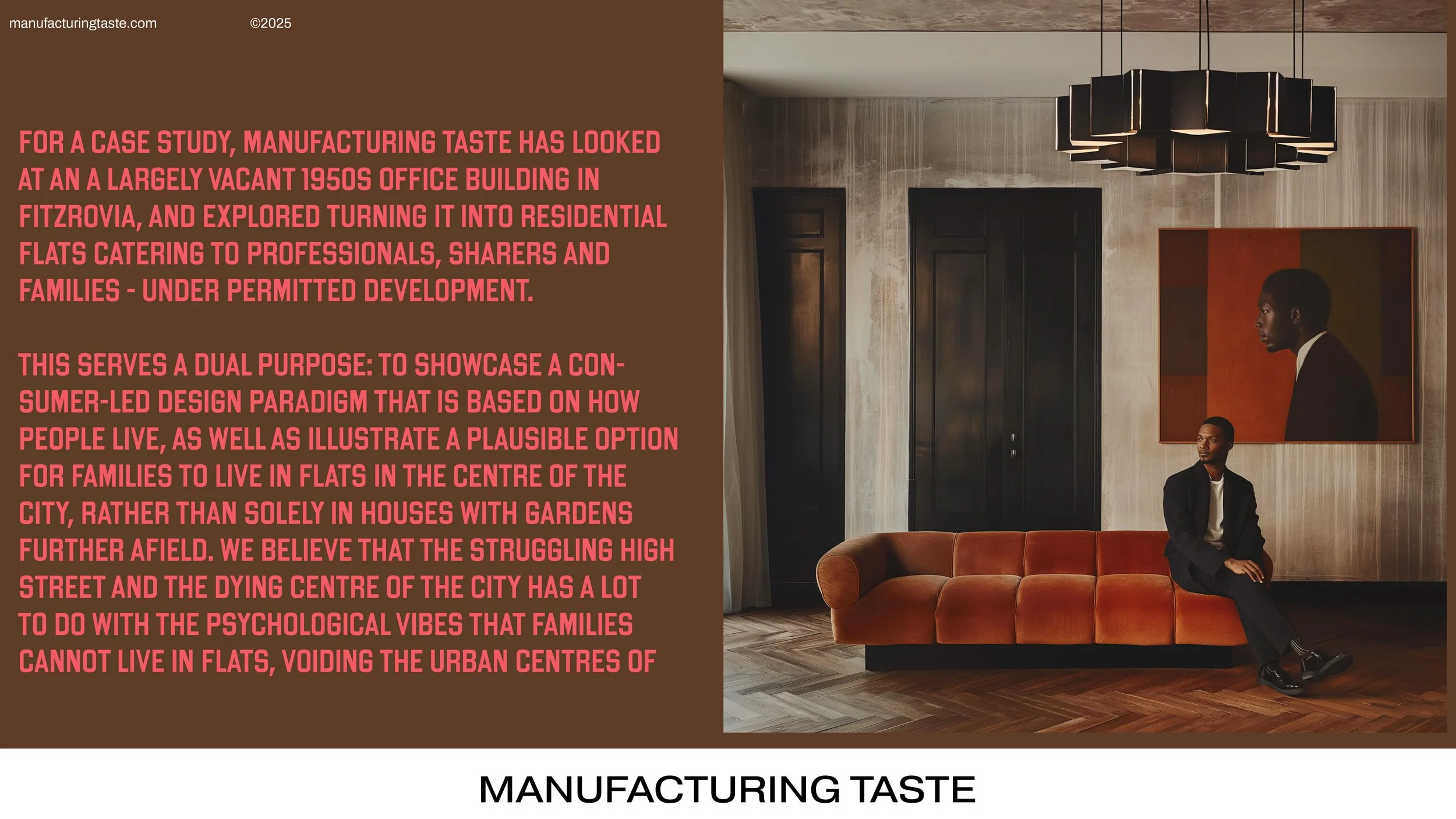
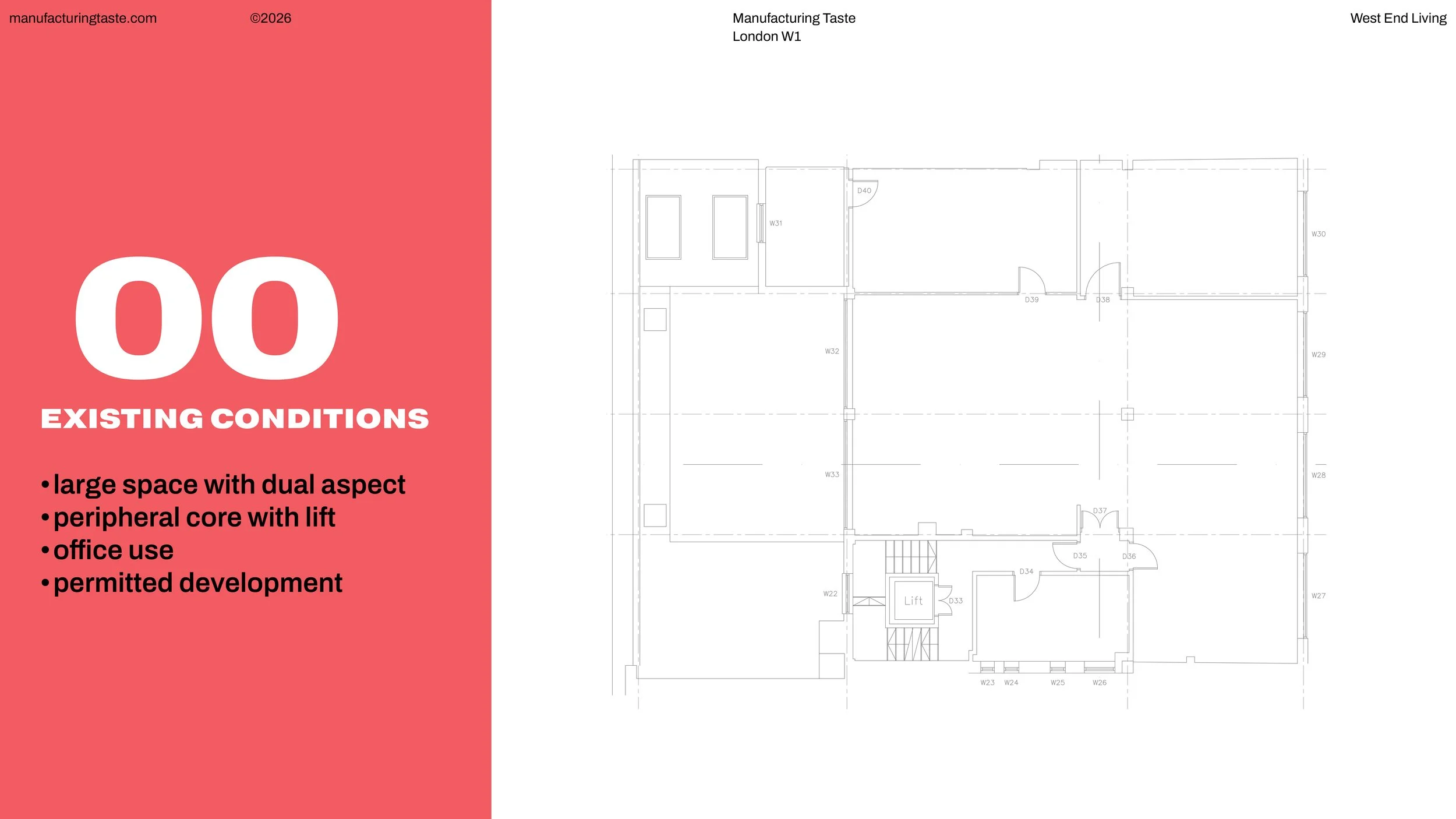
This feasibility study re-imagines a largely vacant 1950s office building in the West End as residential accommodation under permitted development.
Rather than begin with unit mix compliance or housing standards or market tropes, the project began with positioning.
We began with positioning:
Who lives here?
What kind of life does this building signal?
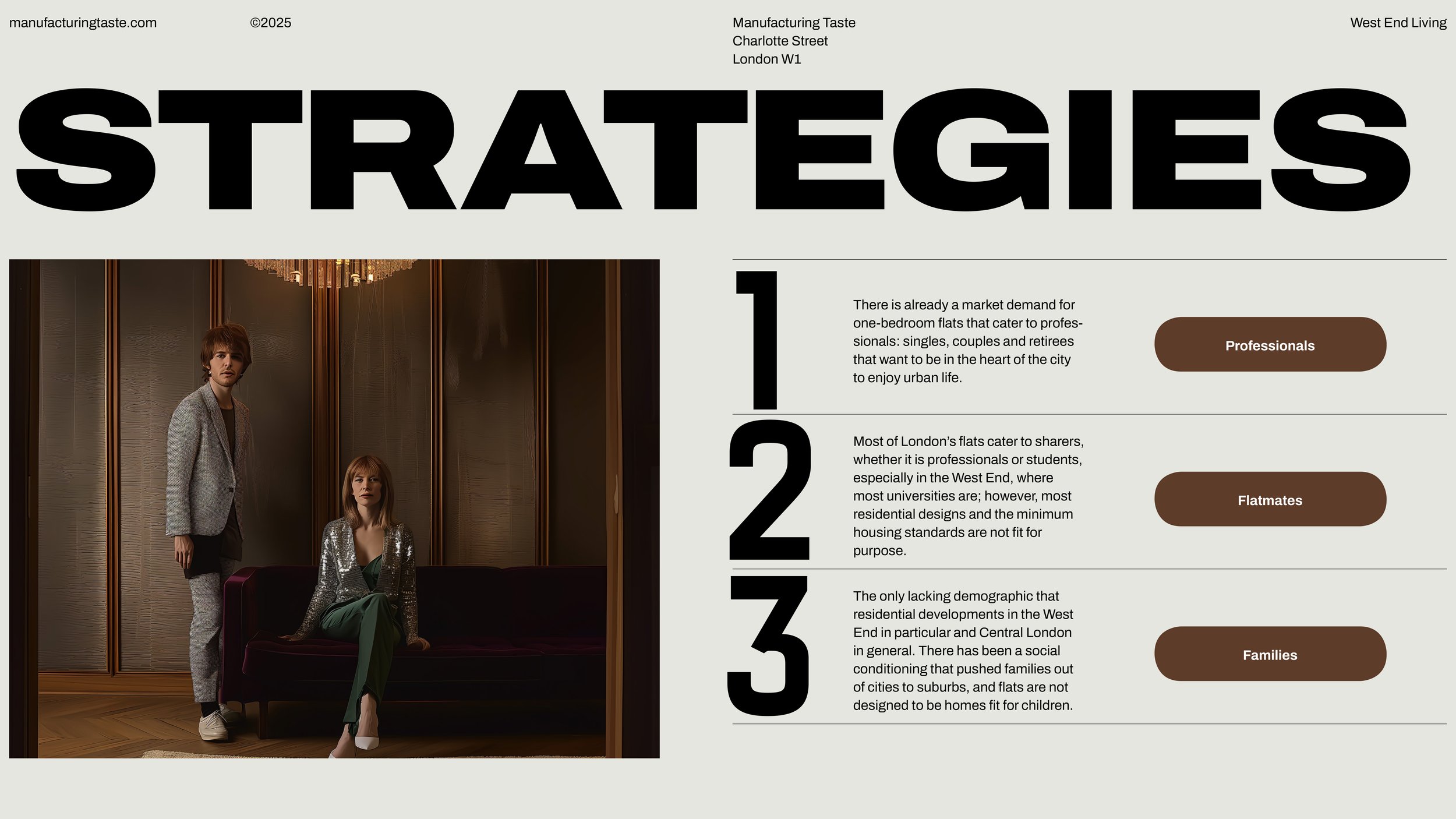
How can we make flat sharing feel deliberate rather than desultory?
How can we make urban living enticing for those who may not choose it, like families, without defaulting to suburban typologies?
The premise was simple: British residential architecture is our of step with how people actually live. Urban living is both spatial and psychological.
Strategic Premise
Residential developments, especially build-to-rent, are conceived for compliance first and positioned later. The unit mix satisfies the spreadsheet. The layouts satisfy housing standards. The spaces satisfy market tropes: open-plan kitchens, blended rooms and white boxes.Branding and marketing are then applied superficially to sell what has already been fixed.
This project inverted that sequence:Branding drives leasing strategy. Leasing strategy drives spatial hierarchy. Spatial hierarchy drives architectural form.
Architectural Concept
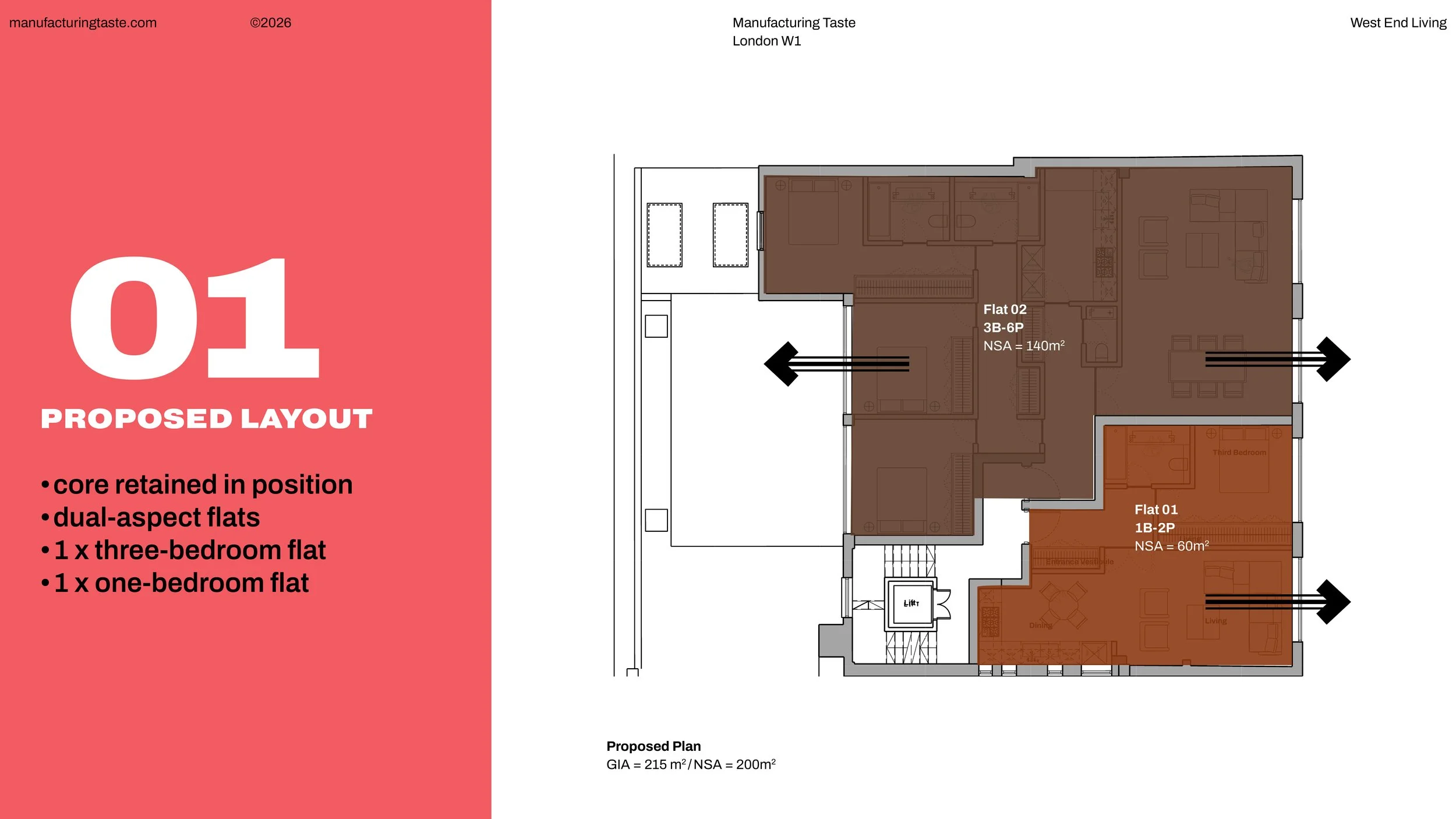
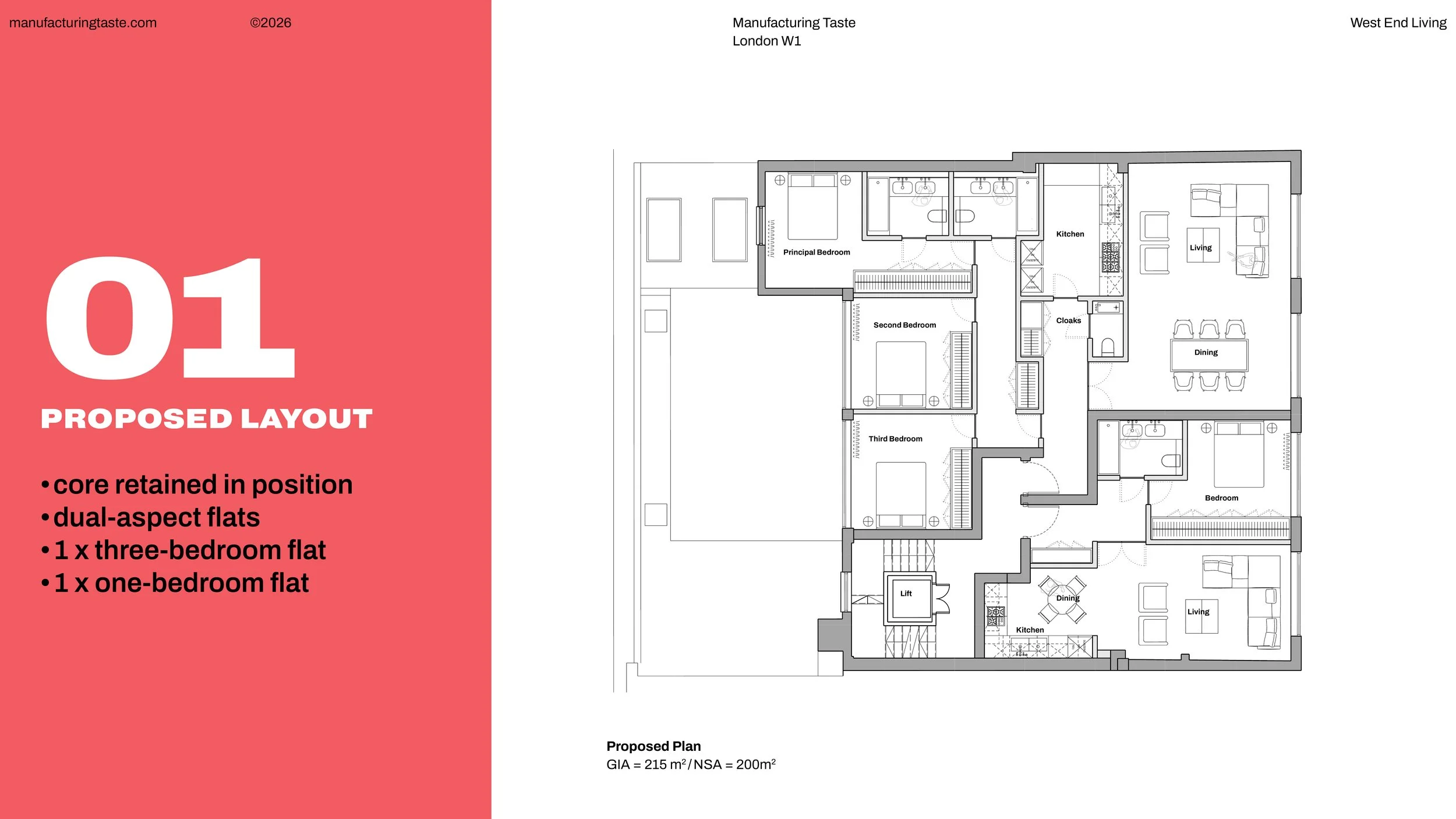
The layouts are organised around coexistence, privacy and negotiated proximity.
Rather than defaulting to open-plan tropes designed to “create the illusion of space,” the scheme reintroduces:
– Thresholds
– Hierarchies between public and private
– Defined circulation
– Opportunities for retreat
Flat sharing is designed as deliberate rather than accidental. Family living becomes viable without importing suburban typologies. Domestic life includes friction, intimacy and independence.
The architecture accommodates it.
Visual & Cultural Language
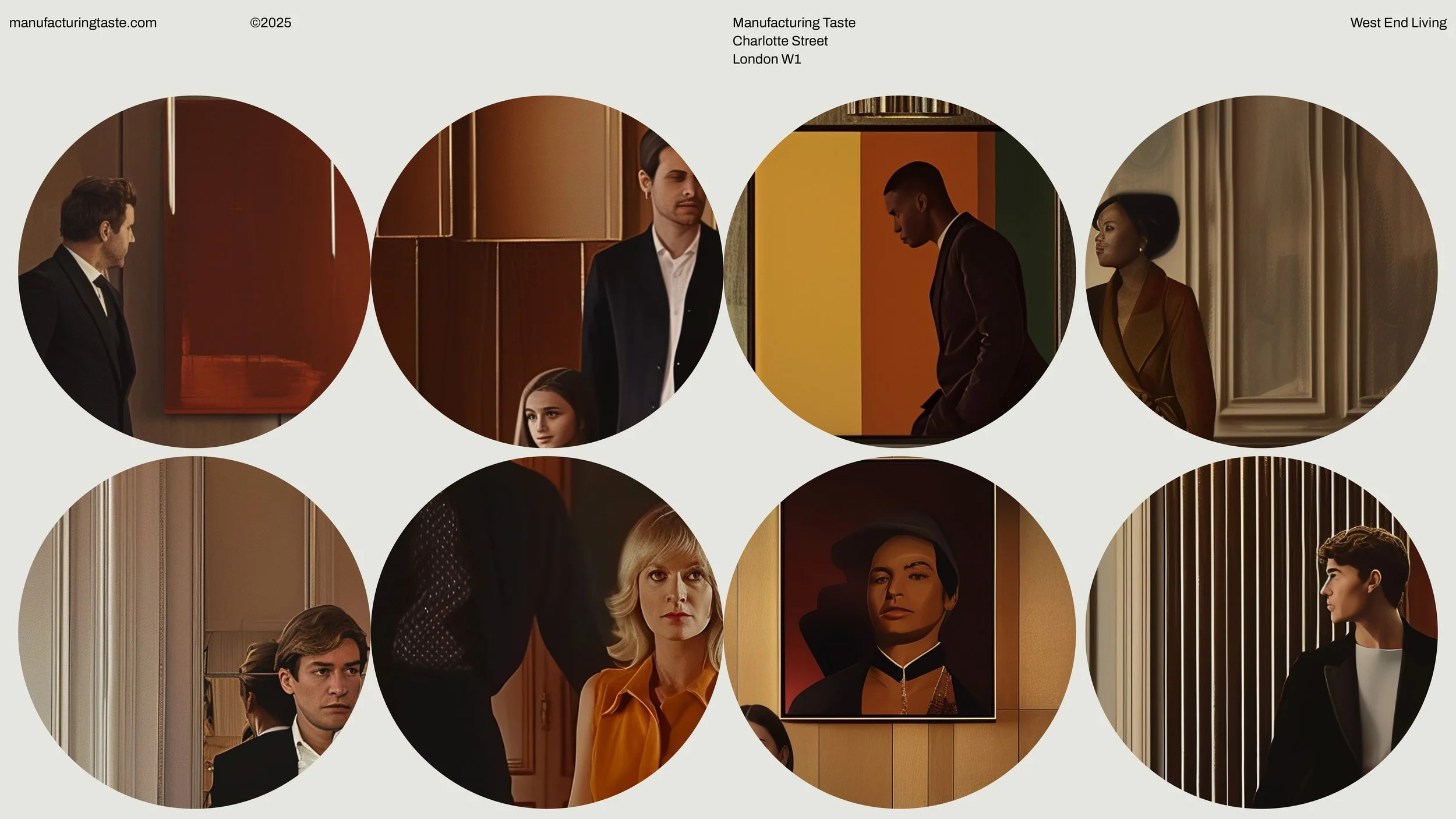
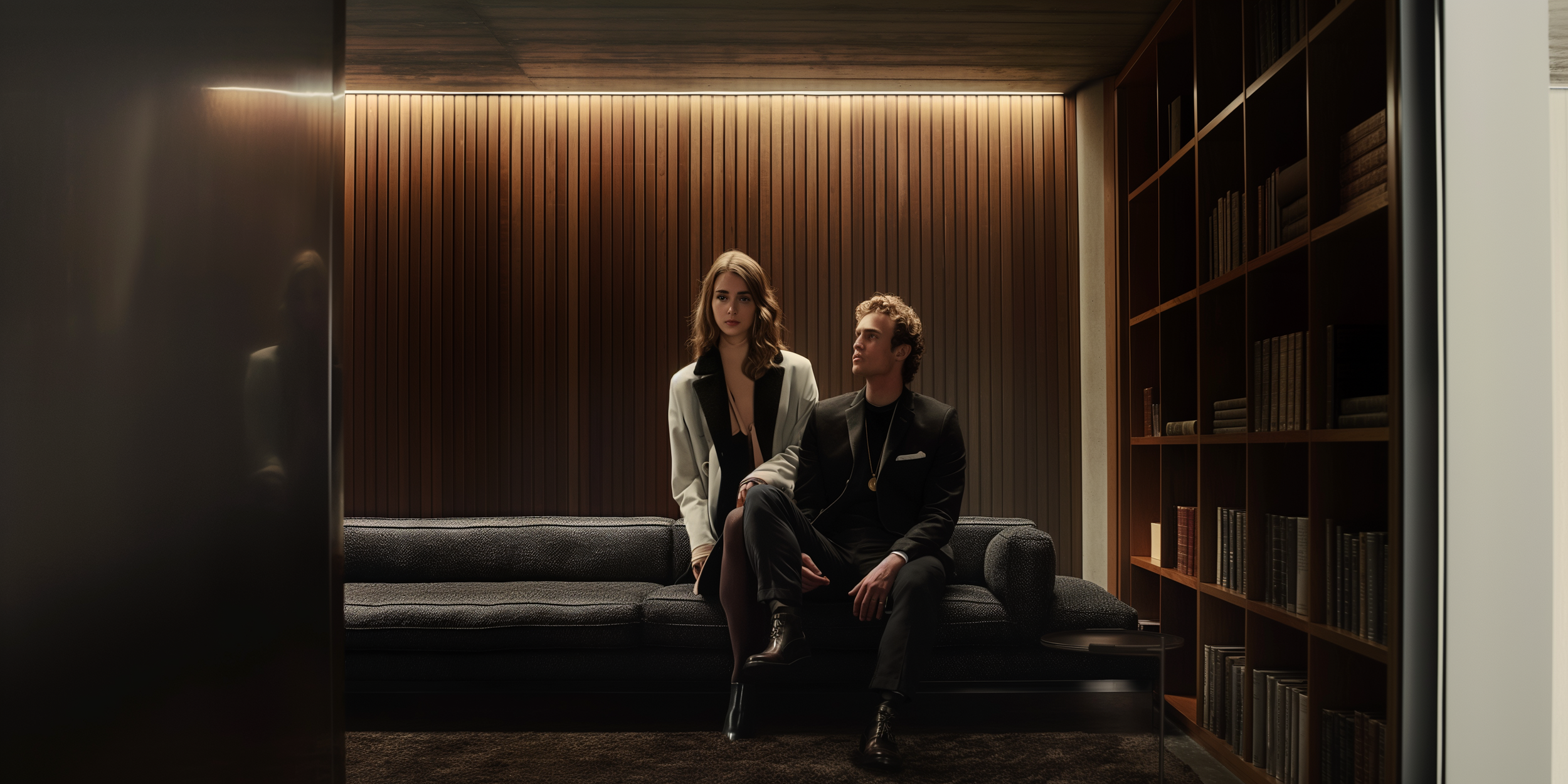
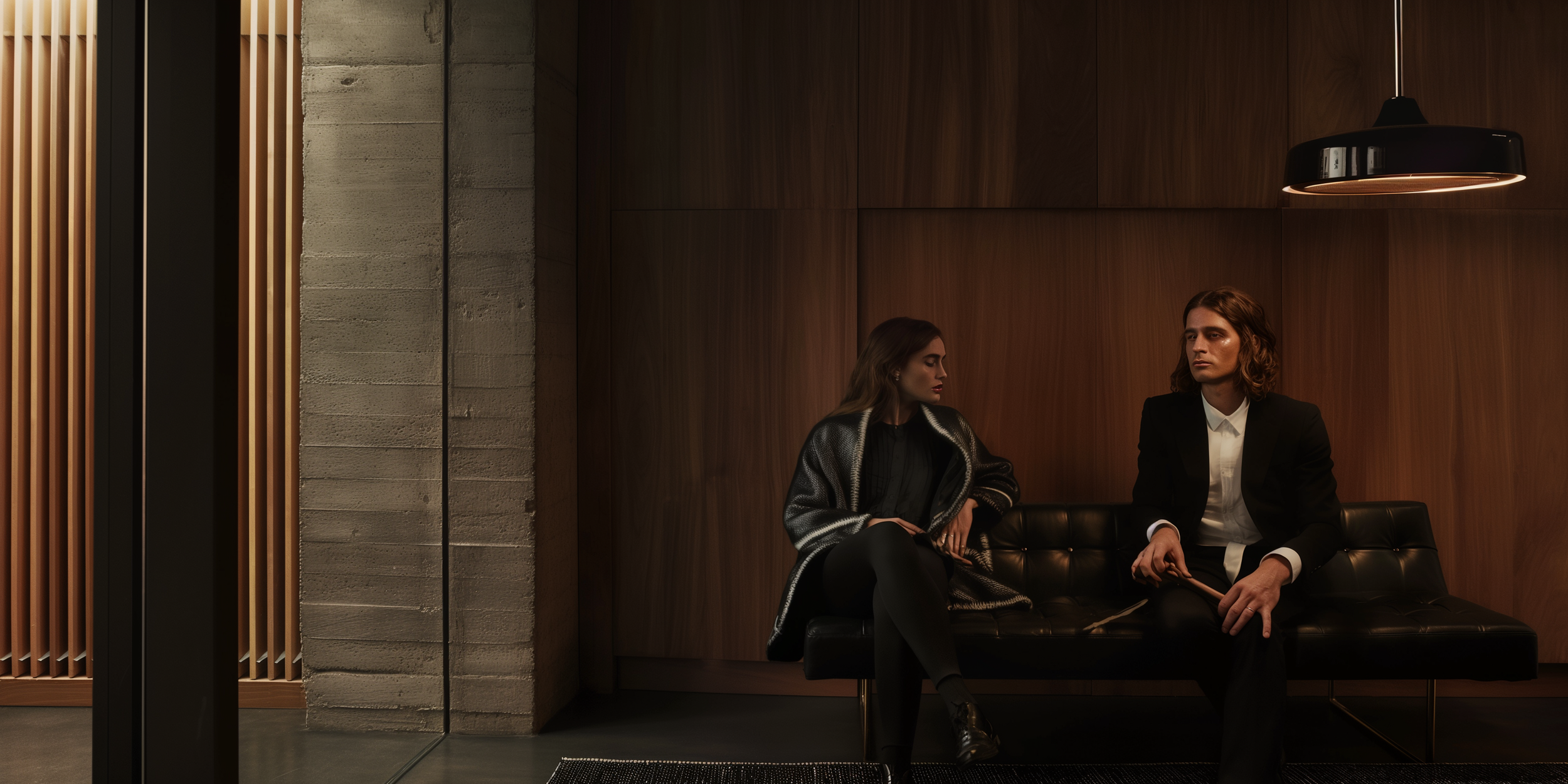
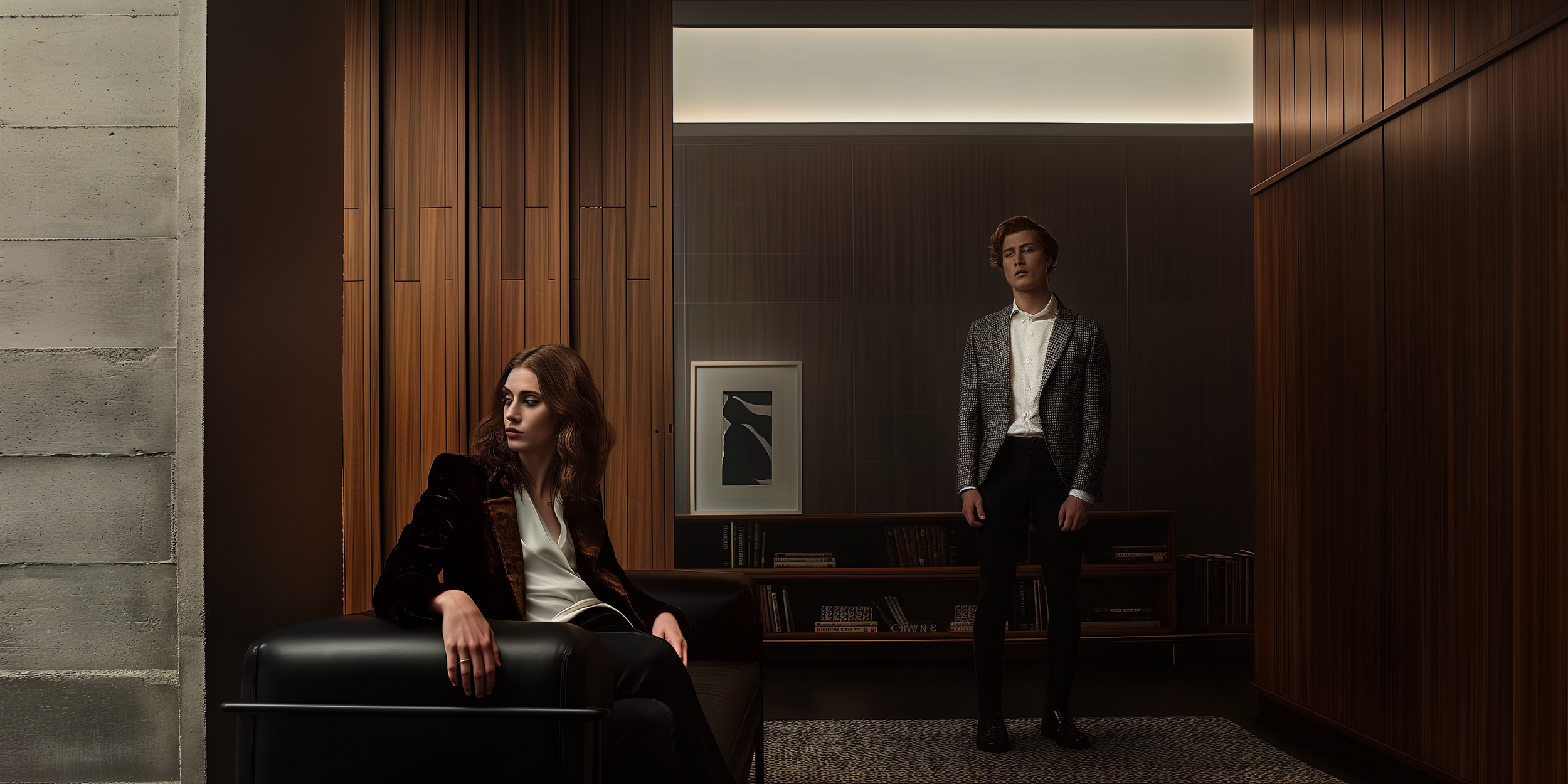
The visual language reinforces the strategic intent, set up as a series of domestic portraits that reference the charged intimacy of Hockney’s couples and the cool subversion of Bardot and Gainsbourg.
The building is positioned as a cultural address, not a generic residential product.
Outcome
In competitive central London markets, compliance is the baseline.Differentiation comes from behavioural understanding and cultural clarity.When positioning and architecture are conceived together, housing stops being a compliant product.It becomes a positioned asset.