LCFJPS20
proposal to reimagine the london college of fashion building on John Prince’s Street
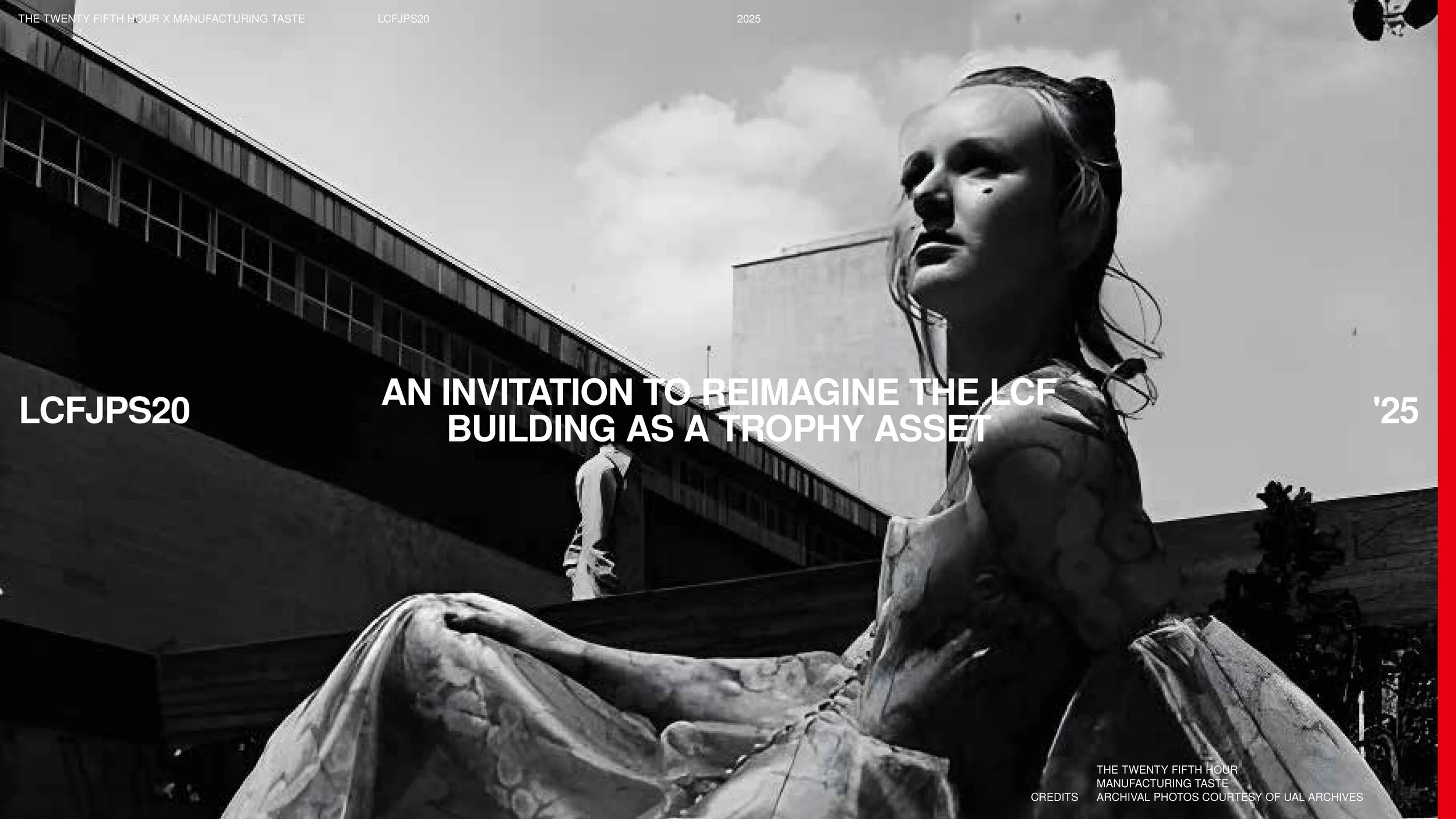
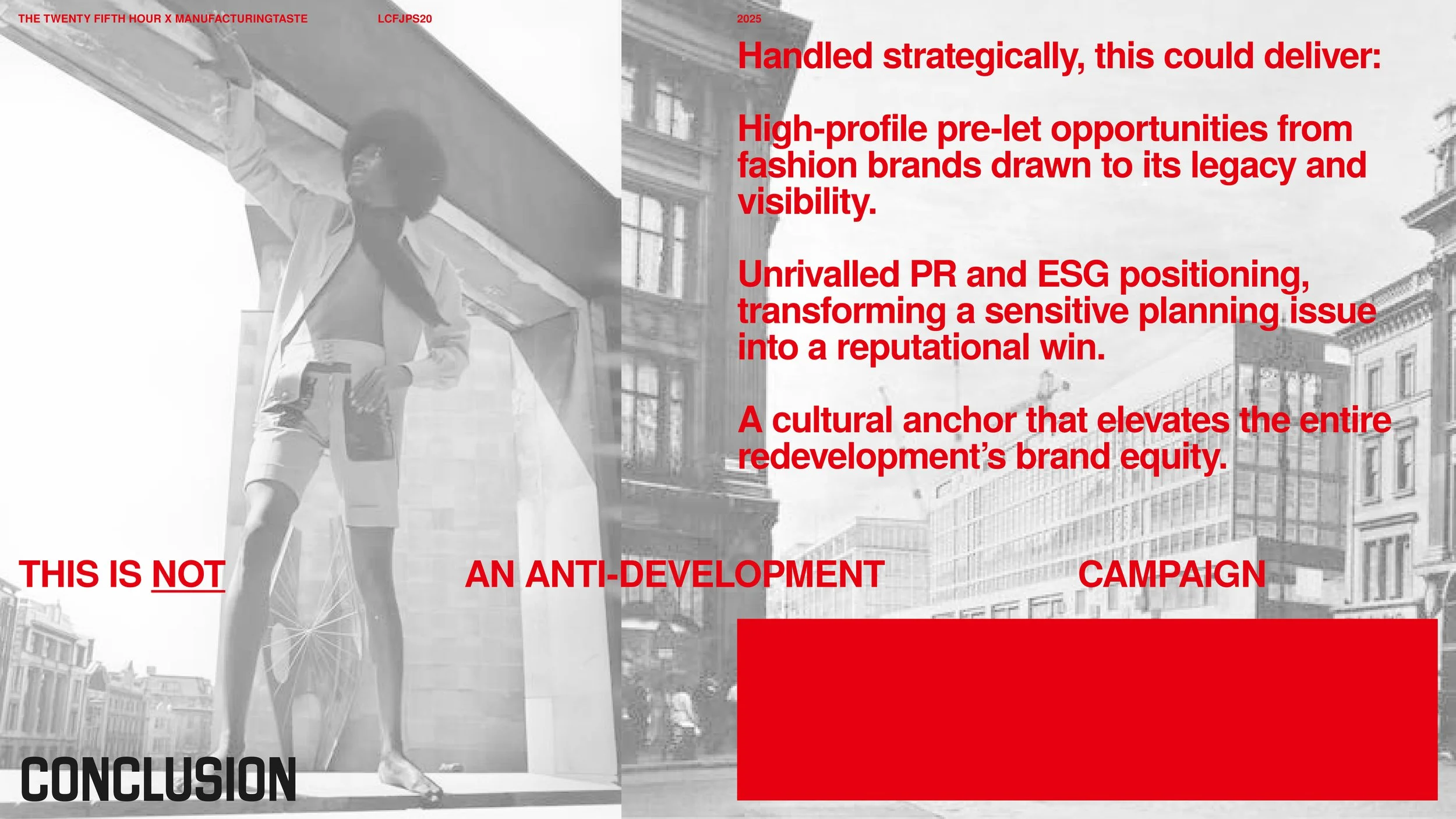
The former London College of Fashion building carries over 60 years of cultural significance. It functioned as a creative incubator for British fashion and remains embedded in London’s global design identity.
Architecturally, it is a rare example of post-war mid-century modernism in the West End - a typology increasingly erased through redevelopment.
This project began with a simple question:
could retention strengthen the scheme rather than constrain it?
From Campaign to Strategic Proposal
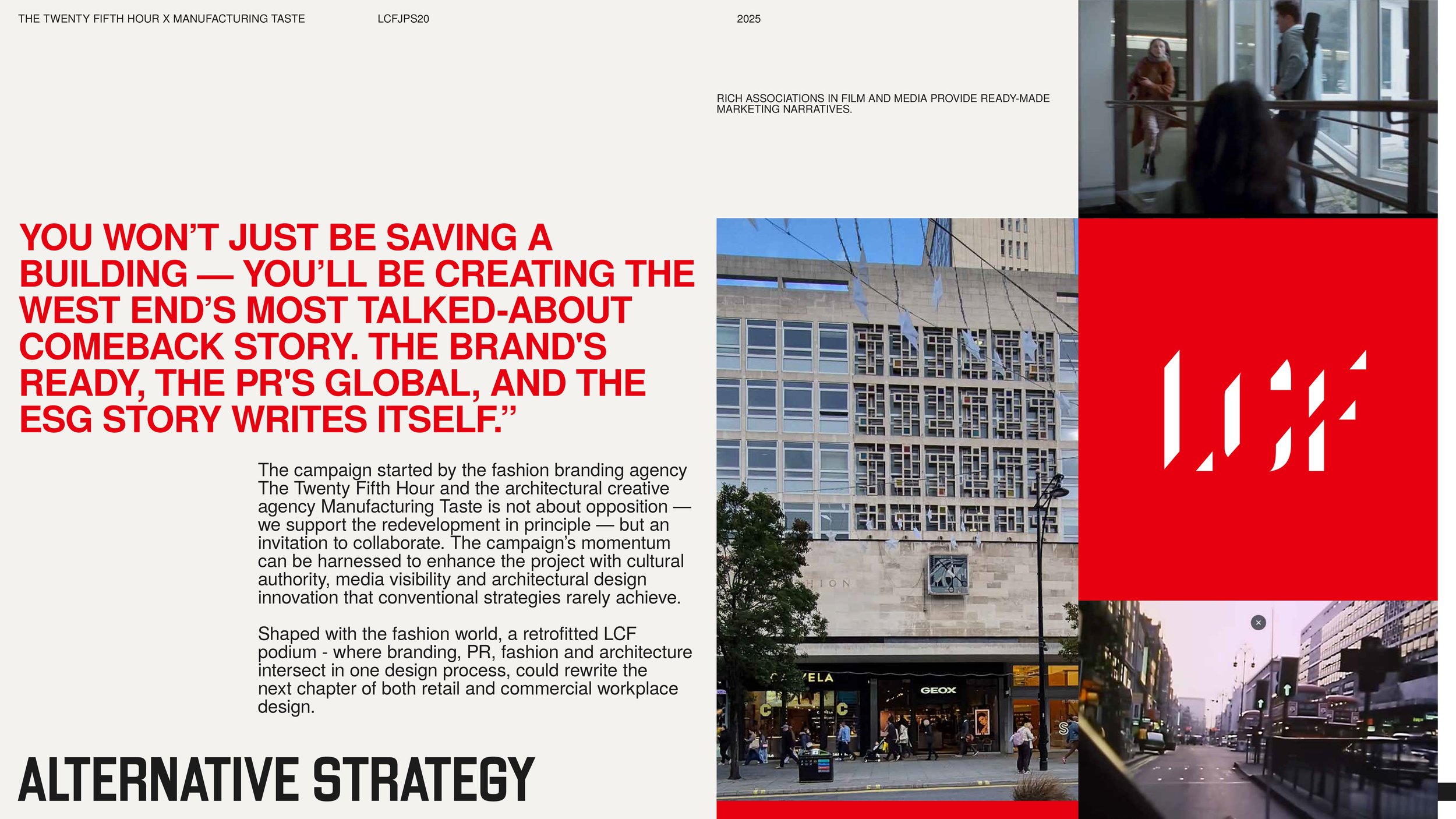
Rather than default to an architectural campaign, the work was developed as a strategic proposal.
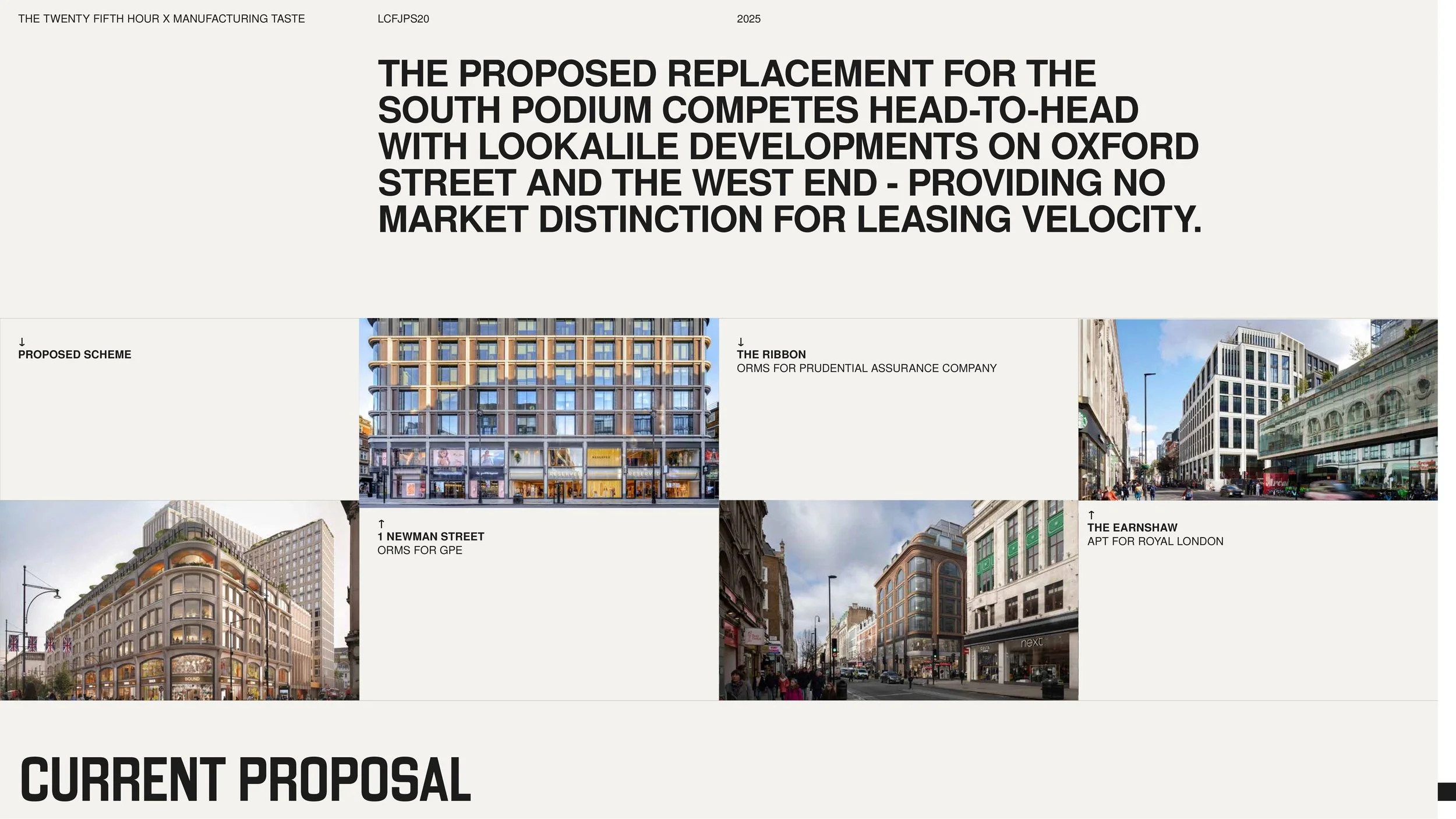
It tested whether retained architectural form, cultural memory and spatial identity could operate not as constraints, but as commercial infrastructure within a large-scale redevelopment.
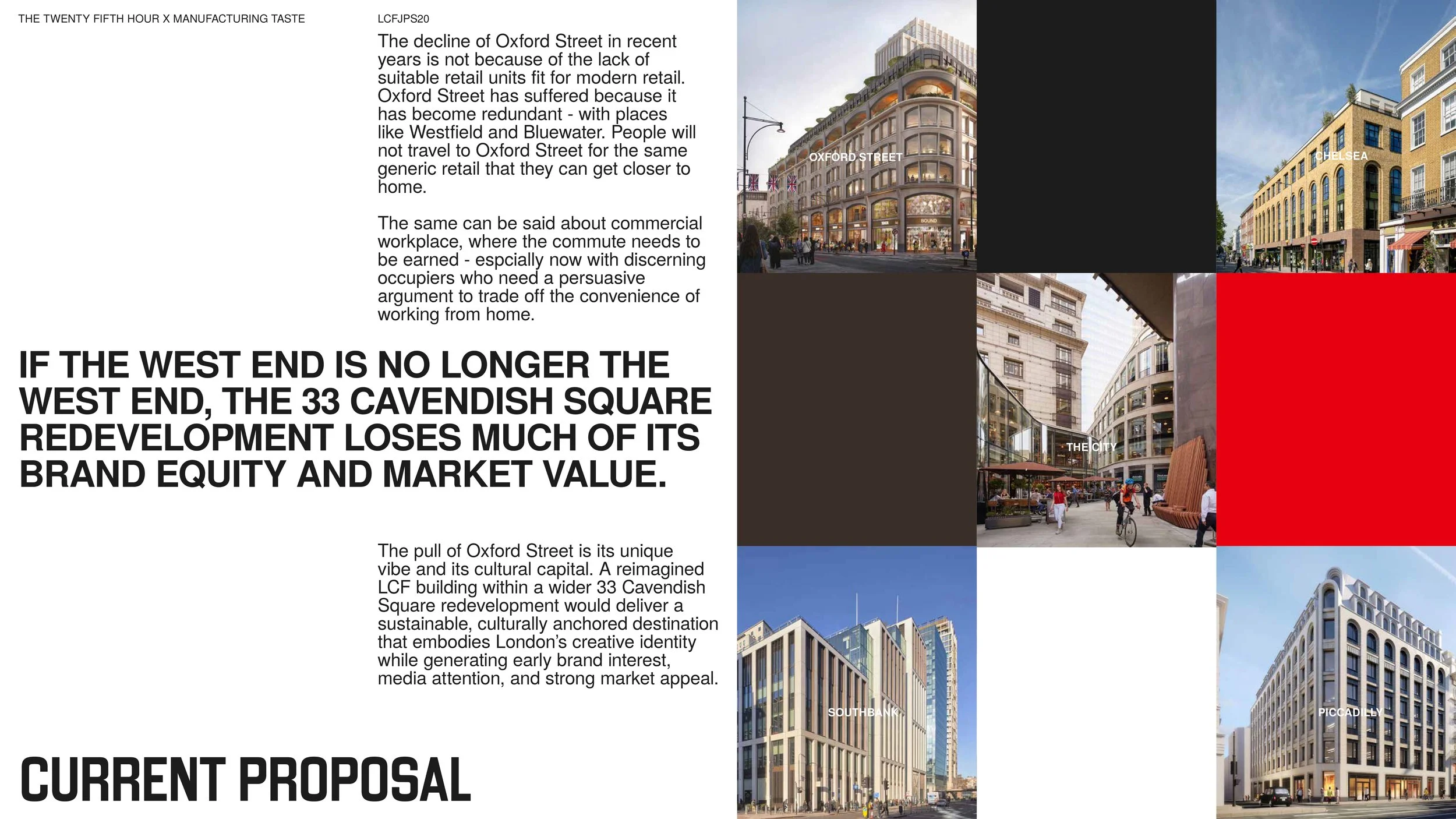
The intention was collaborative: to position retention as a means of increasing differentiation, generating early market attention, and strengthening long-term brand equity for the wider 33 Cavendish Square scheme.
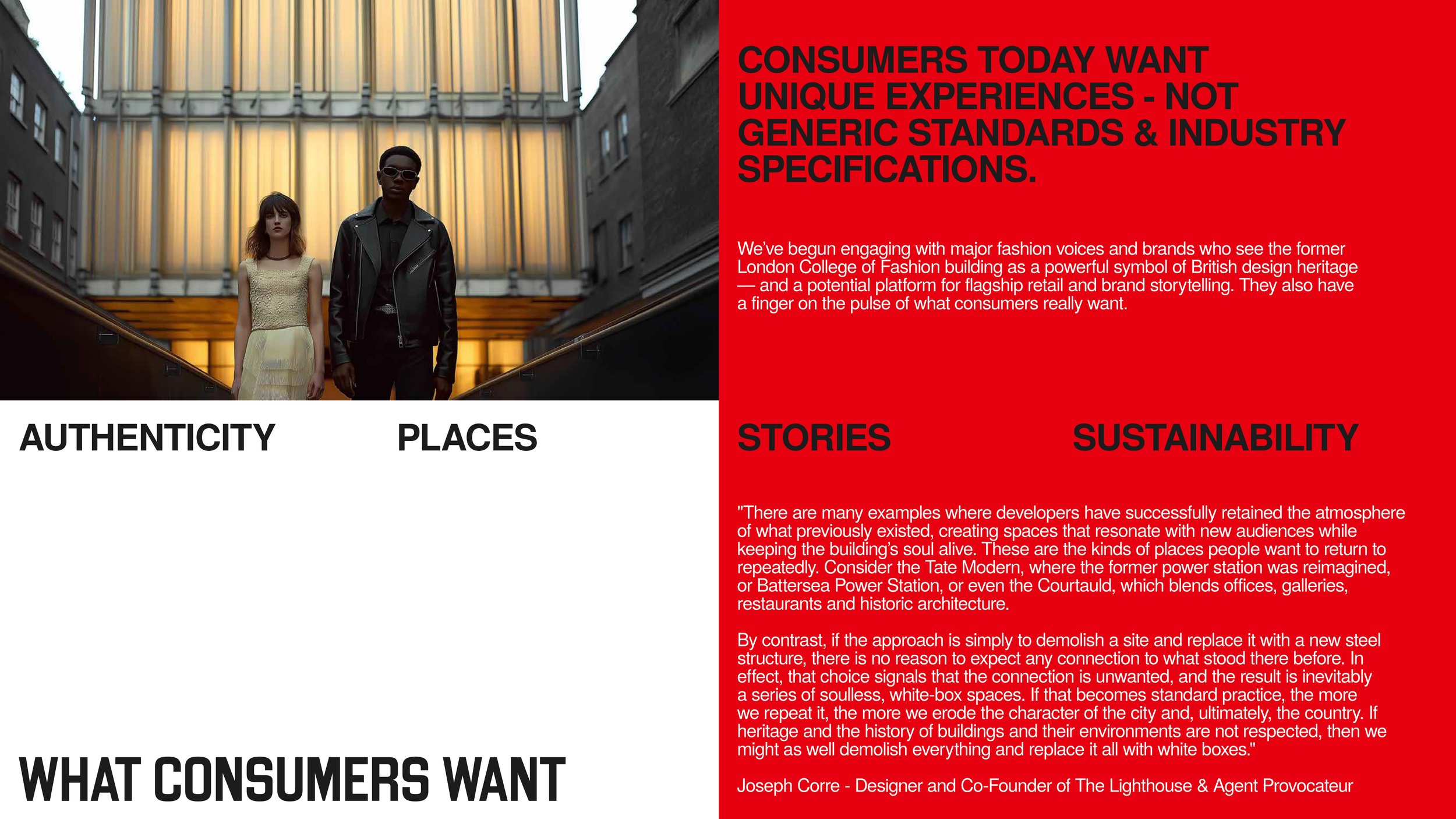
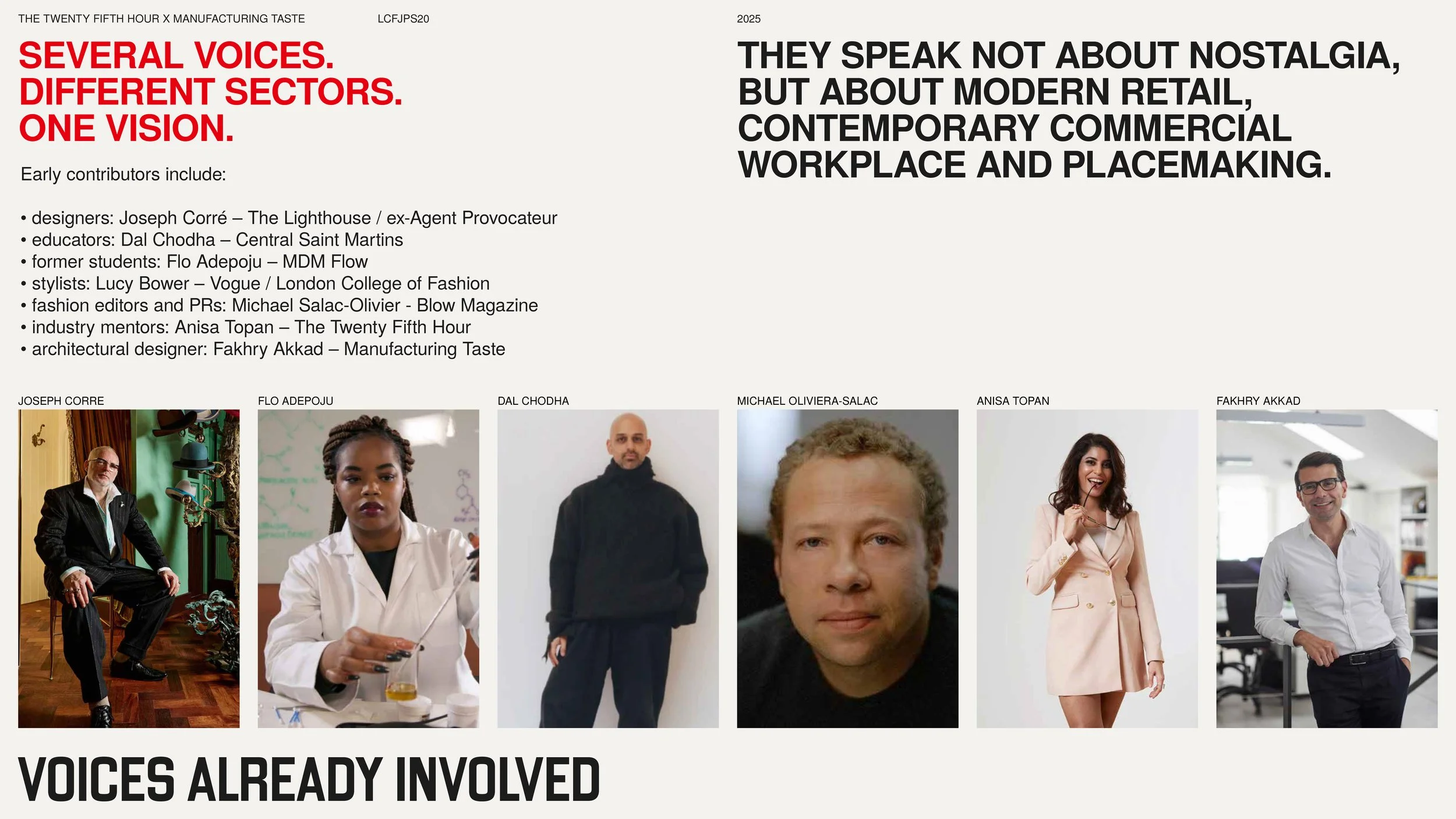
The project deliberately moved beyond architecture, engaging voices across fashion, media and retail, reframing the discussion within the industries that shape demand, not just the built environment.
Public visibility came later, when behind-the-scenes engagement did not materialise.
Market Response
The response revealed the latent influence architecture holds over identity and attachment.
Within one week, a single campaign film reached 55,000 views. A petition gathered over 850 verified signatures from alumni and industry figures. Coverage extended across industry and mainstream platforms, including Architects’ Journal, Londonist, FashionUnited, Time Out and Design Week.
This level of engagement demonstrated demand beyond planning policy, positioning architecture as a cultural and commercial signal, not just a physical asset.
Architecture as Brand Infrastructure
This work positions architecture not as a response to branding, but as a generator of it.
Retained buildings with cultural recognition offer a form of value that cannot be replicated through specification or marketing alone. They anchor identity, create legitimacy, and enable differentiation in increasingly homogenous markets.
The project demonstrates how design can operate at the level of perception, demand and market positioning - aligning architectural strategy with commercial performance.