LCFJPS20
London College of Fashion : An Alternative Positioning Strategy for 33 Cavendish Square
Scope: Positioning Review
Commission: Self-commissioned alternative positioning and campaign to argue for the former LCF building to be incorporated into the wider redevelopment
The Strategic Question
The former London College of Fashion was widely viewed as an obsolete retail asset within the proposed redevelopment of 33 Cavendish Square.
Manufacturing Taste asked a different question:
Had another form of value been left out of the equation?
For over sixty years, the building had shaped British fashion education and accumulated a cultural identity that could not simply be reproduced elsewhere.
Could that cultural capital be leveraged as commercial capital?
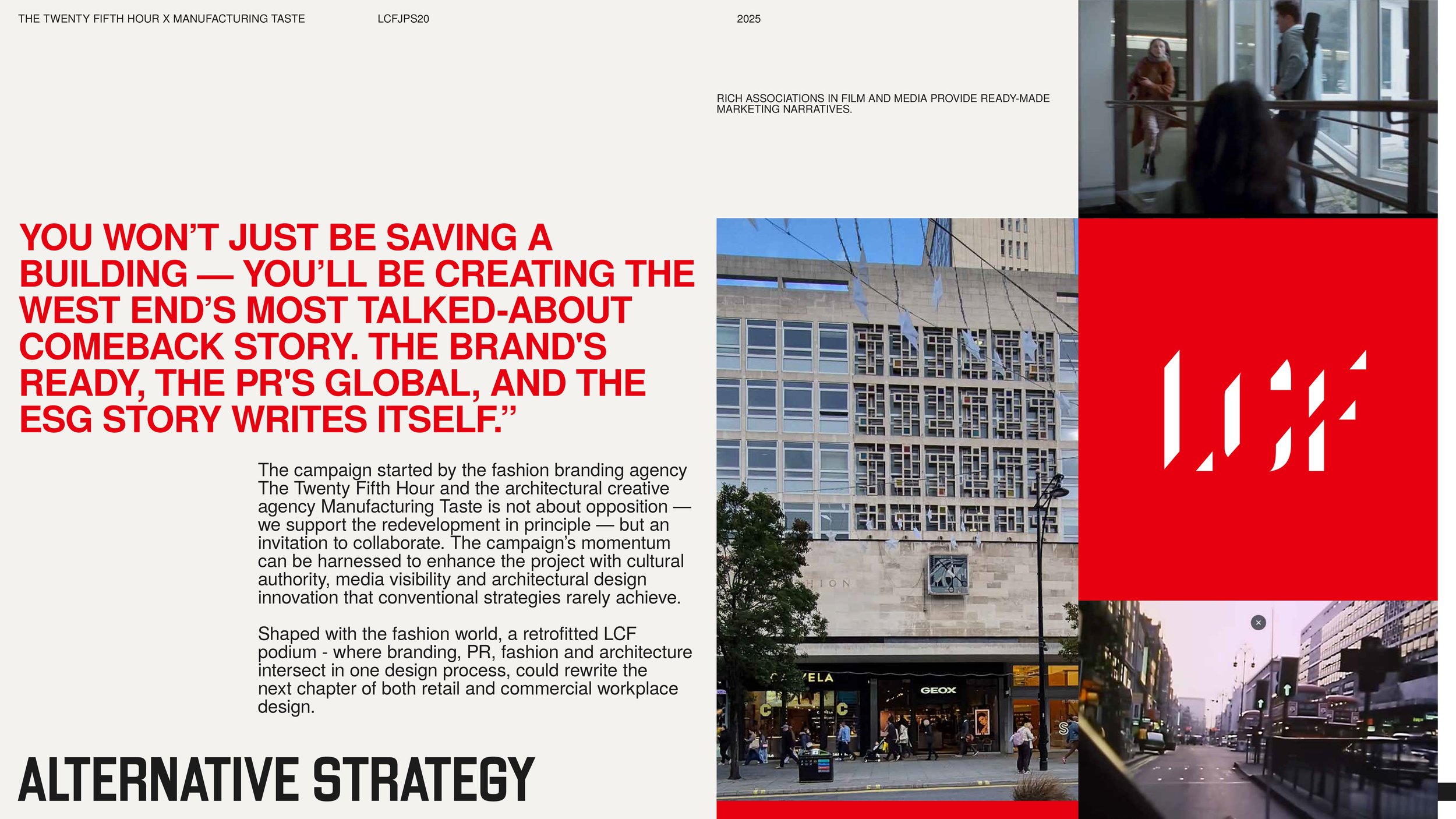
The development team was aiming for a very good office-led Grade A scheme. Manufacturing Taste saw the potential for a trophy asset: using the retained London College of Fashion as the strategic anchor of a more differentiated redevelopment.
Competitors could replicate specification, amenities and architectural quality. They could not replicate sixty years of accumulated cultural capital.
The Method
The alternative positioning accepted the wider masterplan but questioned one of the assumptions underlying the proposed demolition: that the requirements of modern retail necessarily made the existing building commercially obsolete.
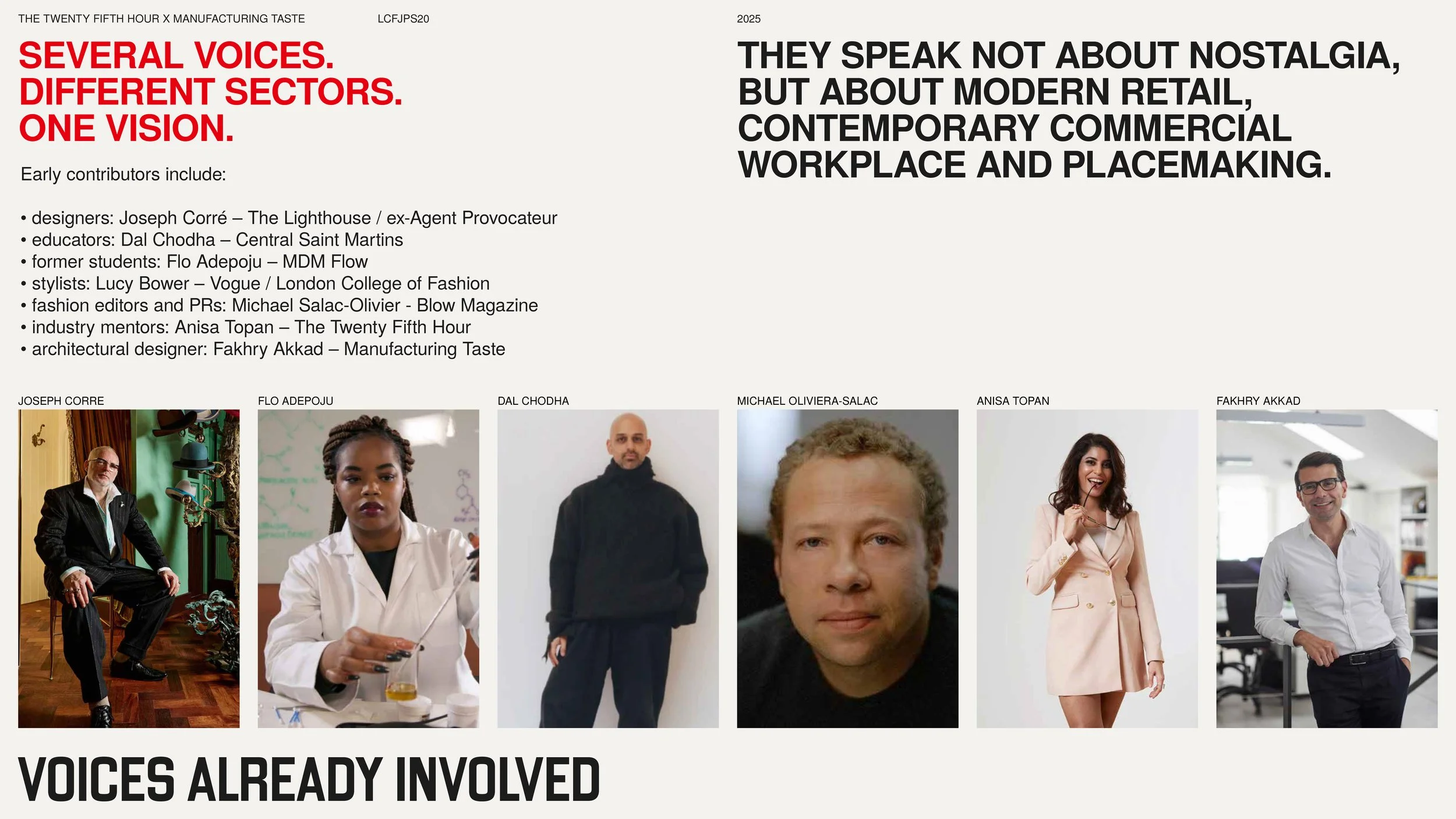
Rather than accepting industry standards as proxies for market demand, Manufacturing Taste tested those assumptions directly with fashion and retail—the sectors those standards claimed to represent.
The project deliberately engaged fashion, retail and media to ask whether they agreed with the assumptions embedded in those standards. The answer was remarkably consistent: no.
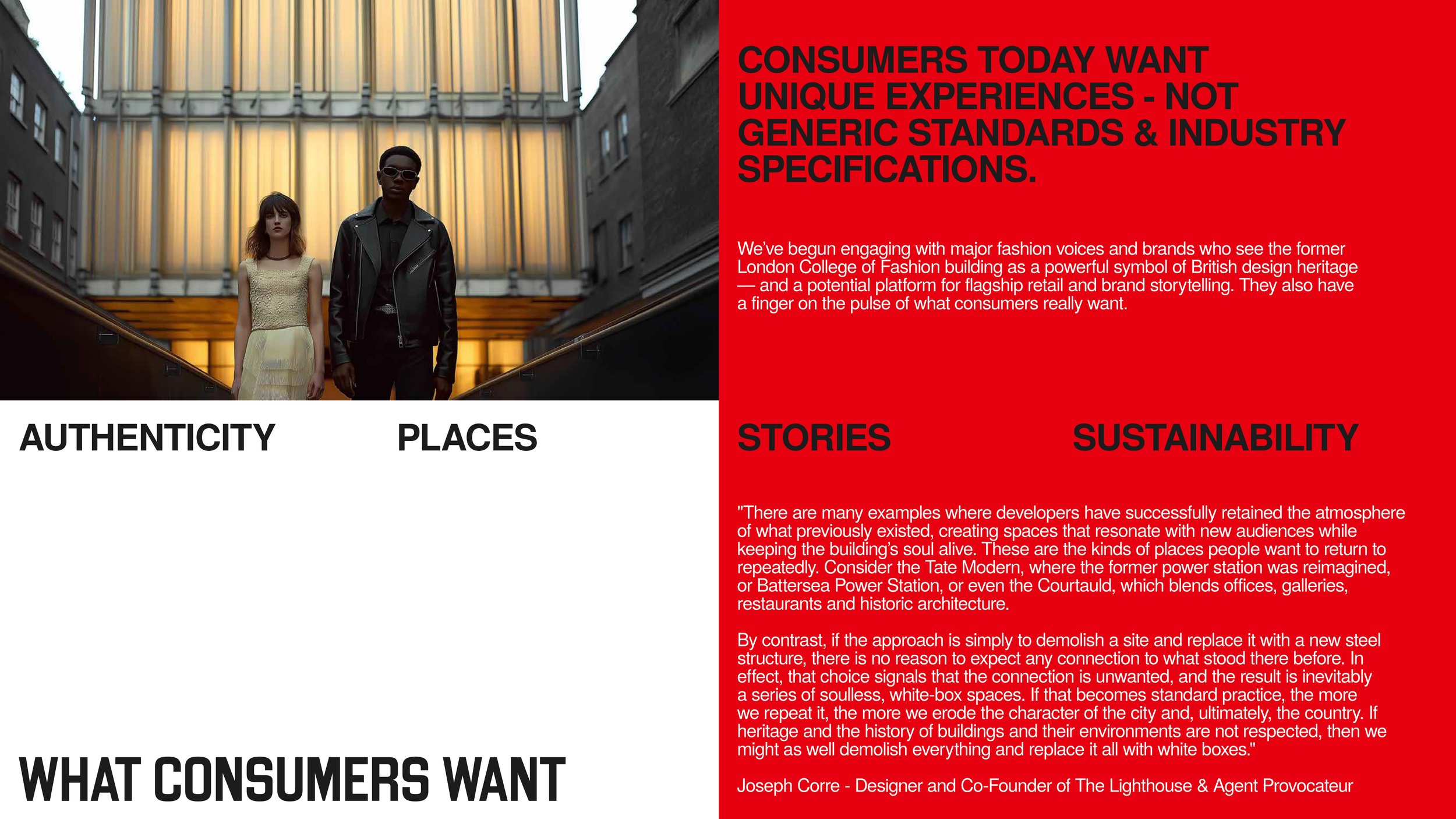
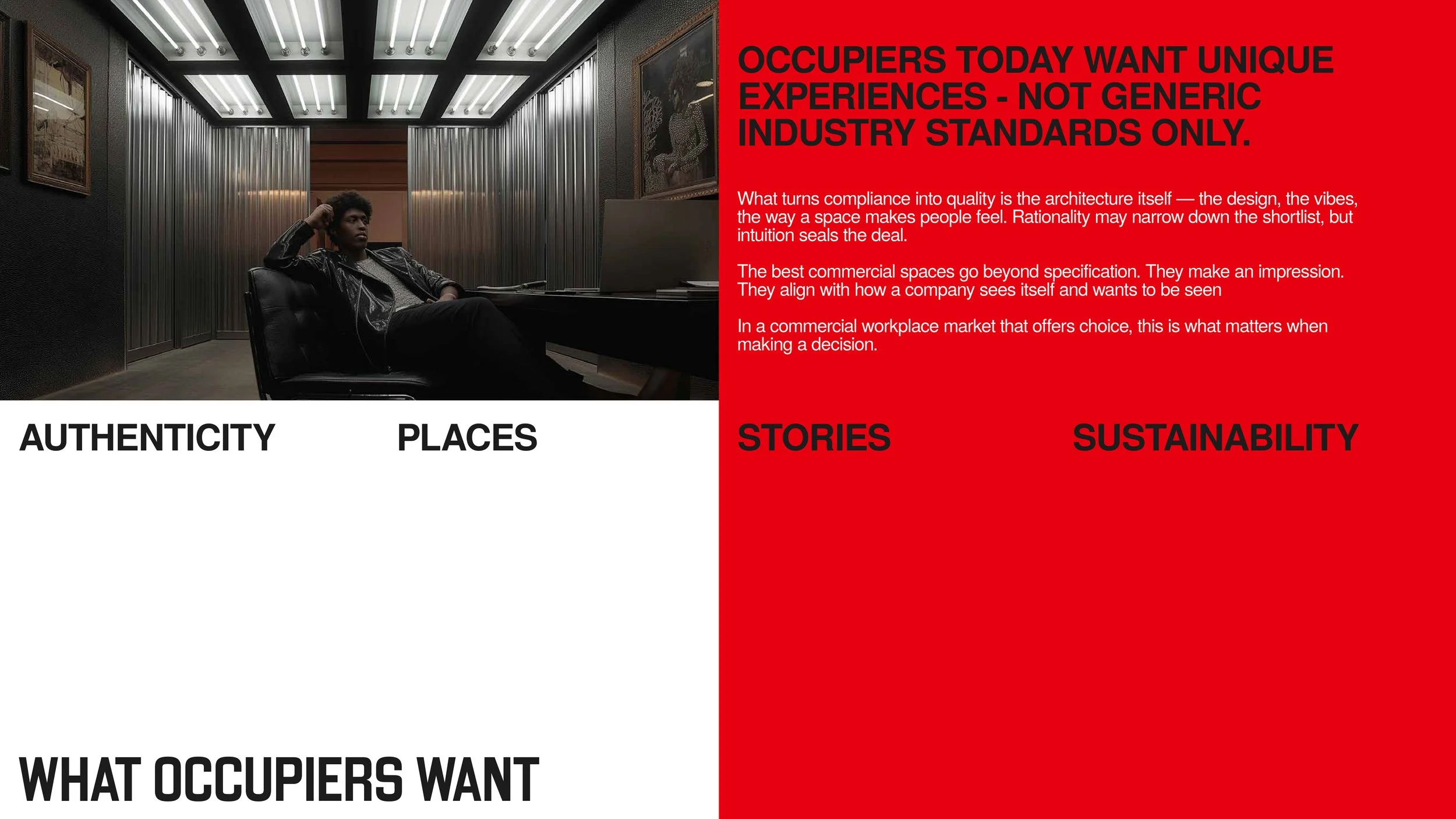
Consumers today—whether shoppers or occupiers—are looking for unique destinations, experiences and authenticity. The existing building could deliver these in droves.
Had the market confirmed the conventional assumptions—if column-free space and other standard requirements were what mattered—the market had spoken. Instead, the response suggested that what had been treated as an obsolete asset could become the basis of a differentiated proposition.
The objective was not to create a branding campaign after the design was complete, but to use market insight to shape the proposition before strategic decisions became fixed.
Strategic Objectives
Differentiation
Turn the London College of Fashion's accumulated cultural capital into an advantage competing schemes could not easily replicate.
Cultural Positioning
Reconnect the redevelopment with the fashion ecosystem that gave the site its significance, leveraging its cultural capital to create commercial value through authentic associations rather than marketing alone.
De-risking
Reduce exposure to changing market trends over the long development cycle. By the time the redevelopment comes to market in the mid-2030s, occupier habits, consumer expectations and architectural tastes may have changed. A trophy asset rooted in the West End's historic relationship with British retail and London's status as a global design capital offered a more enduring basis for distinction.
Market Momentum
Activate the building's existing recognition within fashion and design to generate earned attention, cultural legitimacy and visibility beyond the property sector.
Pre-let Potential
Create a distinctive proposition capable of attracting fashion and creative occupiers with an authentic reason to associate themselves with the redevelopment.
Market Response
Within one week, the campaign film reached more than 55,000 views.
A petition attracted over 1,300 verified signatures from alumni, designers and industry figures.
The project was featured across Architects' Journal, Londonist, FashionUnited, Design Week and Time Out.
Most significantly, the proposition gained traction across fashion, retail and media—providing an early indication that the building's cultural capital had relevance beyond the property sector.
The project simply revealed its strategic potential.
Commercial Insight
The project did not argue against commercial objectives. It argued for them.
It questioned whether commercial value had been defined too narrowly—and whether industry standards were being used as proxies for what the market actually values.
Rather than optimising only measurable variables such as specification or development efficiency, Manufacturing Taste tested whether cultural meaning itself could become a commercial asset: strengthening differentiation, building brand equity and creating a more durable source of market advantage.
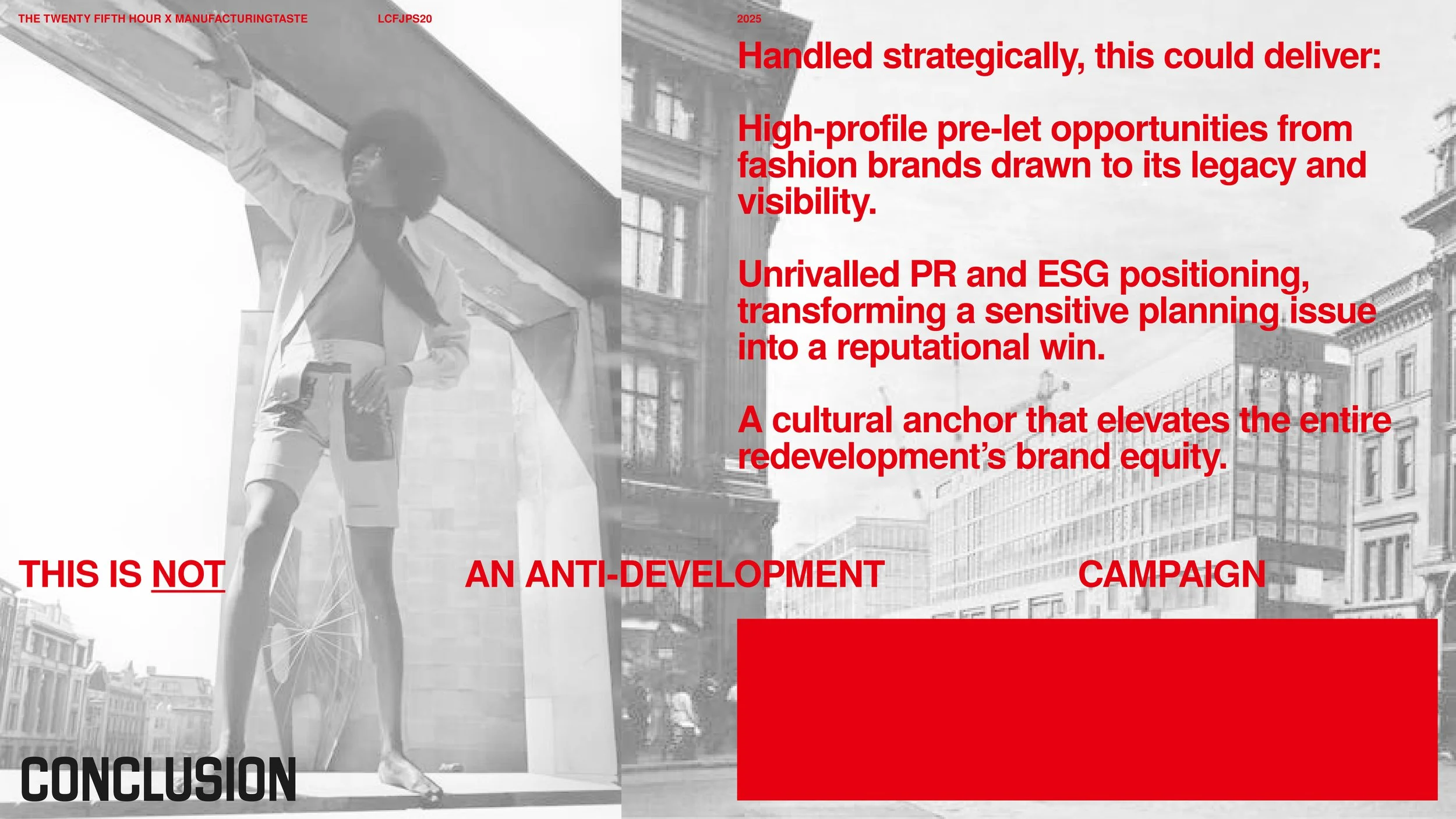
The project demonstrates how cultural capital can become commercial capital—transforming accumulated meaning into differentiation, brand equity and long-term market advantage.