oxford street: the past that never happened
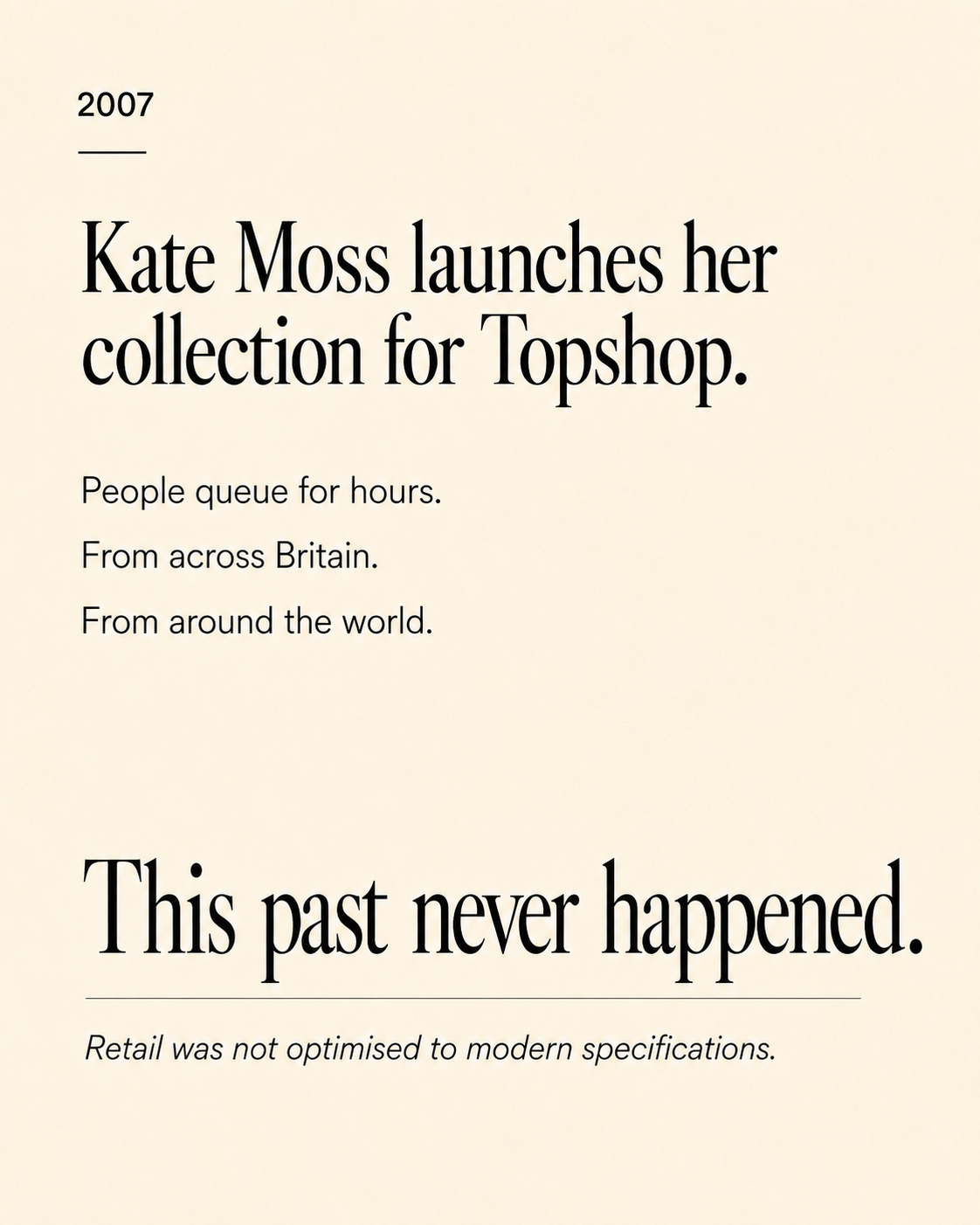
When Kate Moss launched her Topshop collection in 2007, people queued for hours. They came from all over Britain and around the world.
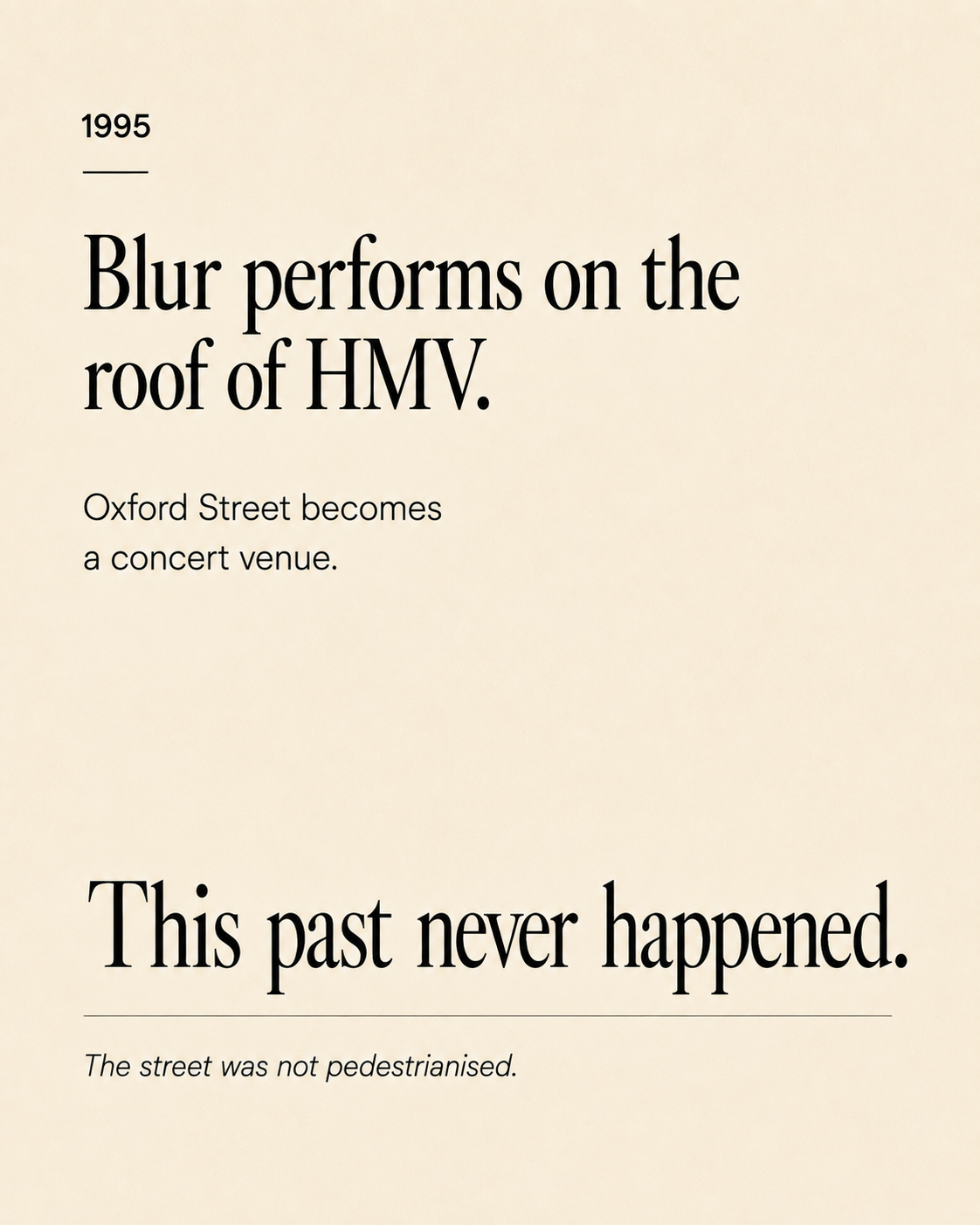
In 1995, Blur performed on the roof of HMV, turning Oxford Street itself into a concert venue.
Did this past ever happen?
Not if you listen to today's dominant narrative.
Oxford Street's story is increasingly told as though its fortunes have always hinged on its infrastructure rather than on the cultural relevance that once made it a destination in the first place.
Infrastructure alone doesn't by default create a distinctive destination. Nor does an overcurated architectural language. Westfield, King's Cross and Battersea Power Station all combine a similar formula in different ways. Perhaps the bigger strategic question is: what should Oxford Street become that those places are not?
What if Oxford Street's problem isn't primarily that people dislike its less-than-ideal infrastructure, but that it has lost the reasons why people were prepared to tolerate it? What remains of the cultural magnets that once made Oxford Street a place of pilgrimage?
Oxford Street isn't competing with its own infrastructure; it's competing with other destinations. Optimising infrastructure is a worthwhile objective, but it isn't a positioning strategy.
People travel for what only a place can offer. Infrastructure may frame the experience, but it rarely creates the reason to make the journey. The crowds that waited outside Topshop or HMV weren't making a pilgrimage because the street was pedestrianised. They came because Oxford Street meant something.
If every destination converges on the same formula, where does genuine differentiation come from? We risk ending up with an Oxford Street that has better infrastructure, yet increasingly resembles a non-place that could be anywhere - anywhere but Oxford Street.
Oxford Street's principal challenge is one of positioning, not infrastructure. And Positioning, whether of a building, a retail destination or an entire district, is engineering how an asset will be perceived, valued and chosen by the market.