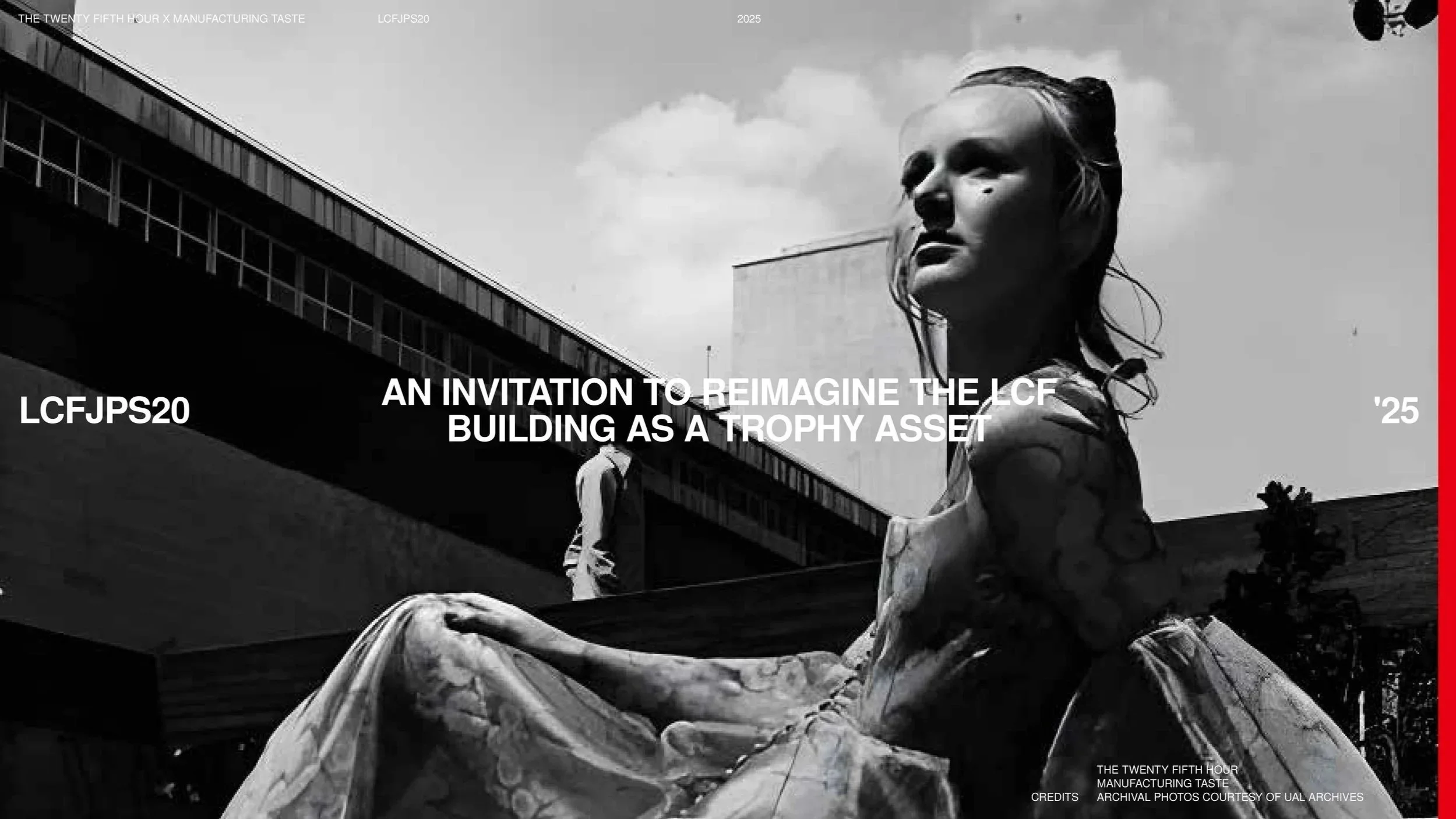
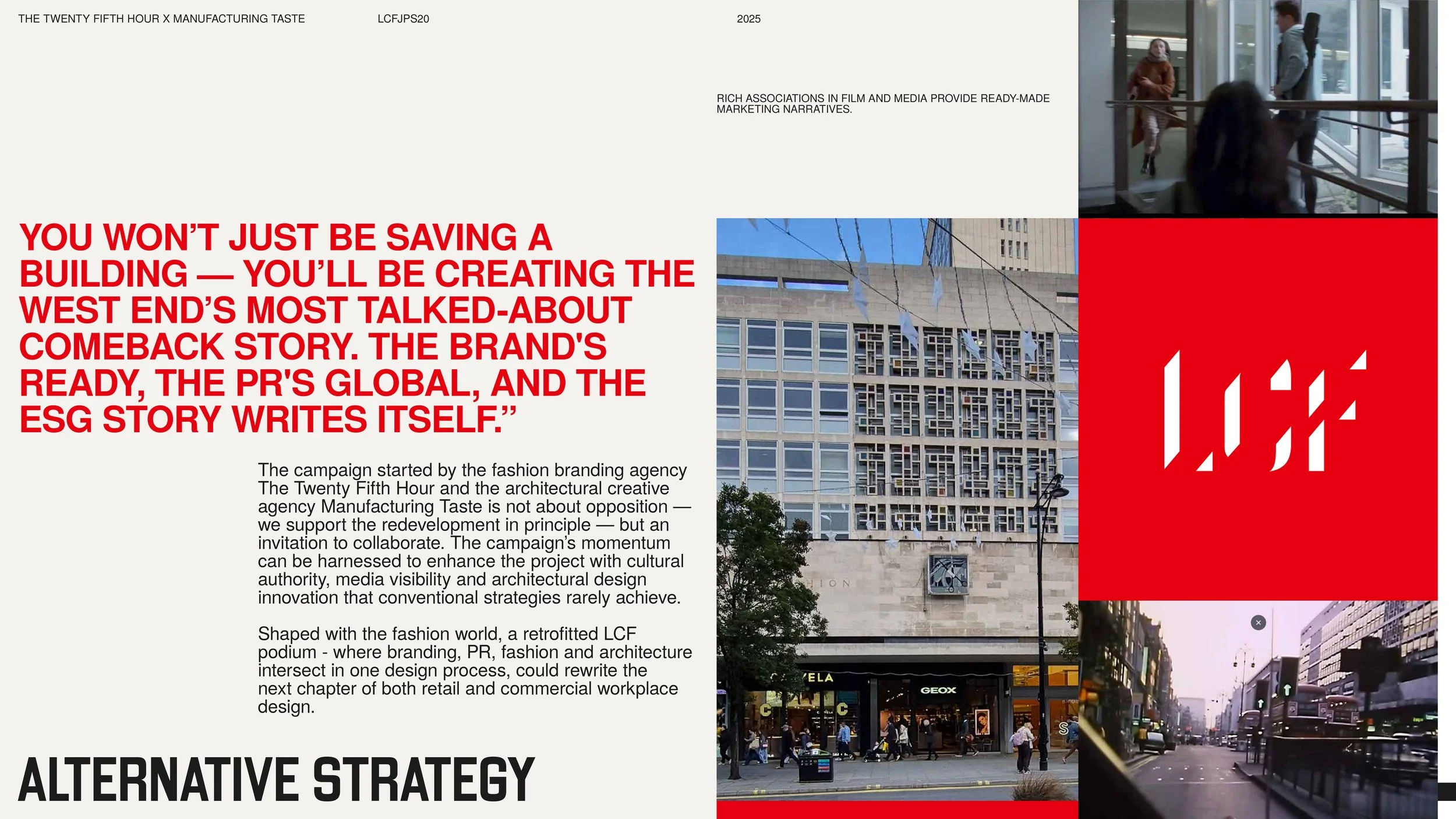
The former London College of Fashion building carries over 60 years of cultural significance. It played a formative role in British fashion education and functioned as a creative incubator whose alumni continue to shape London’s global design reputation.
Architecturally, it is a rare and fine example of post-war mid-century modernism in the West End - a typology that has been steadily eroded through redevelopment.
This project explored how brand equity logic shapes architectural decision-making before form, massing, or materiality are fixed. Through a live London-wide planning process, Manufacturing Taste examined how dominant development narratives - efficiency, flexibility, modernity - can make demolition appear “inevitable,” even where alternative strategies remain viable.
Campaign as Commercial and Architectural Method
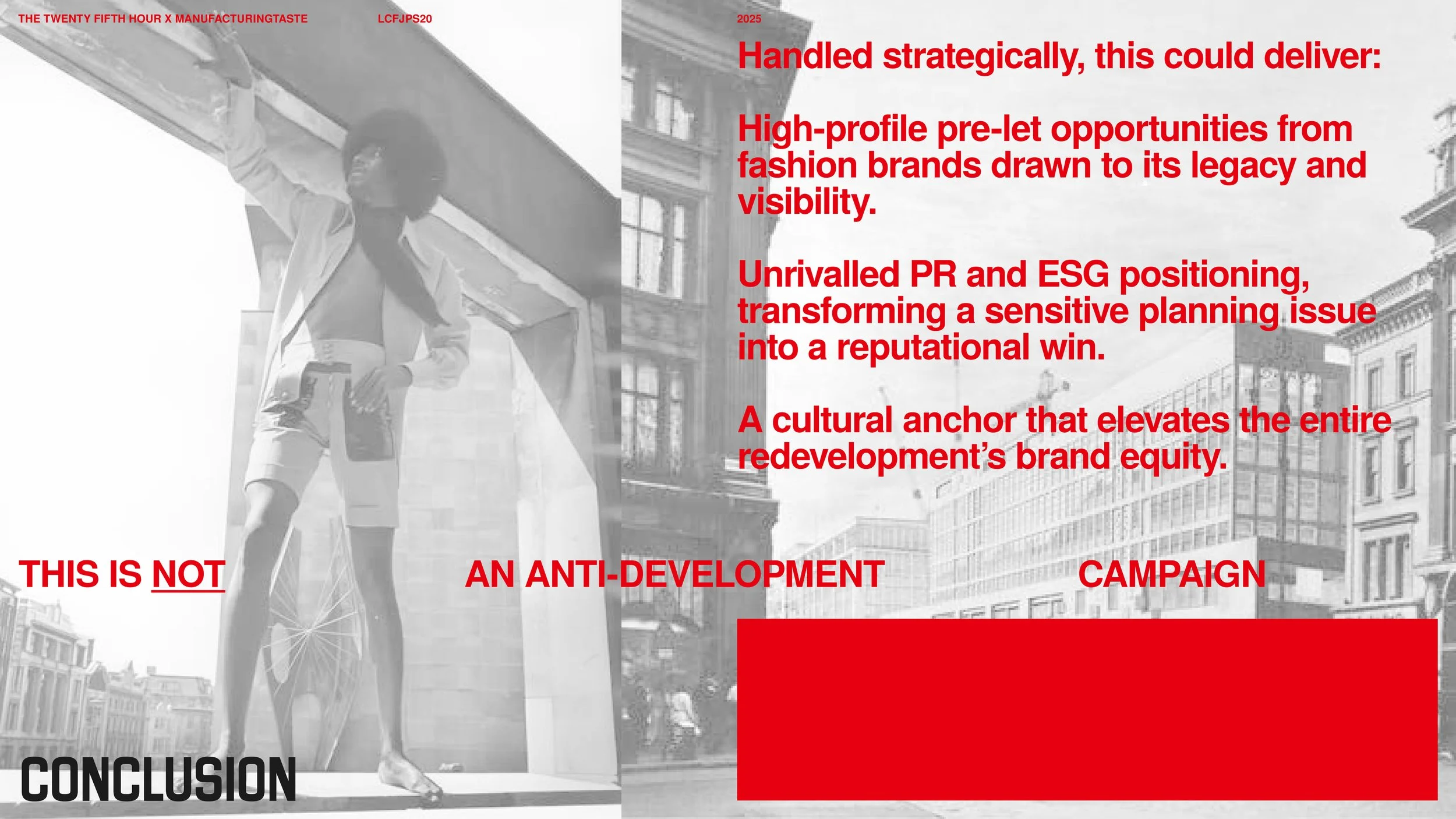
Unlike traditional architectural campaigns, which focus on objection or preservation, this campaign treated cultural retention as a strategic design instrument.
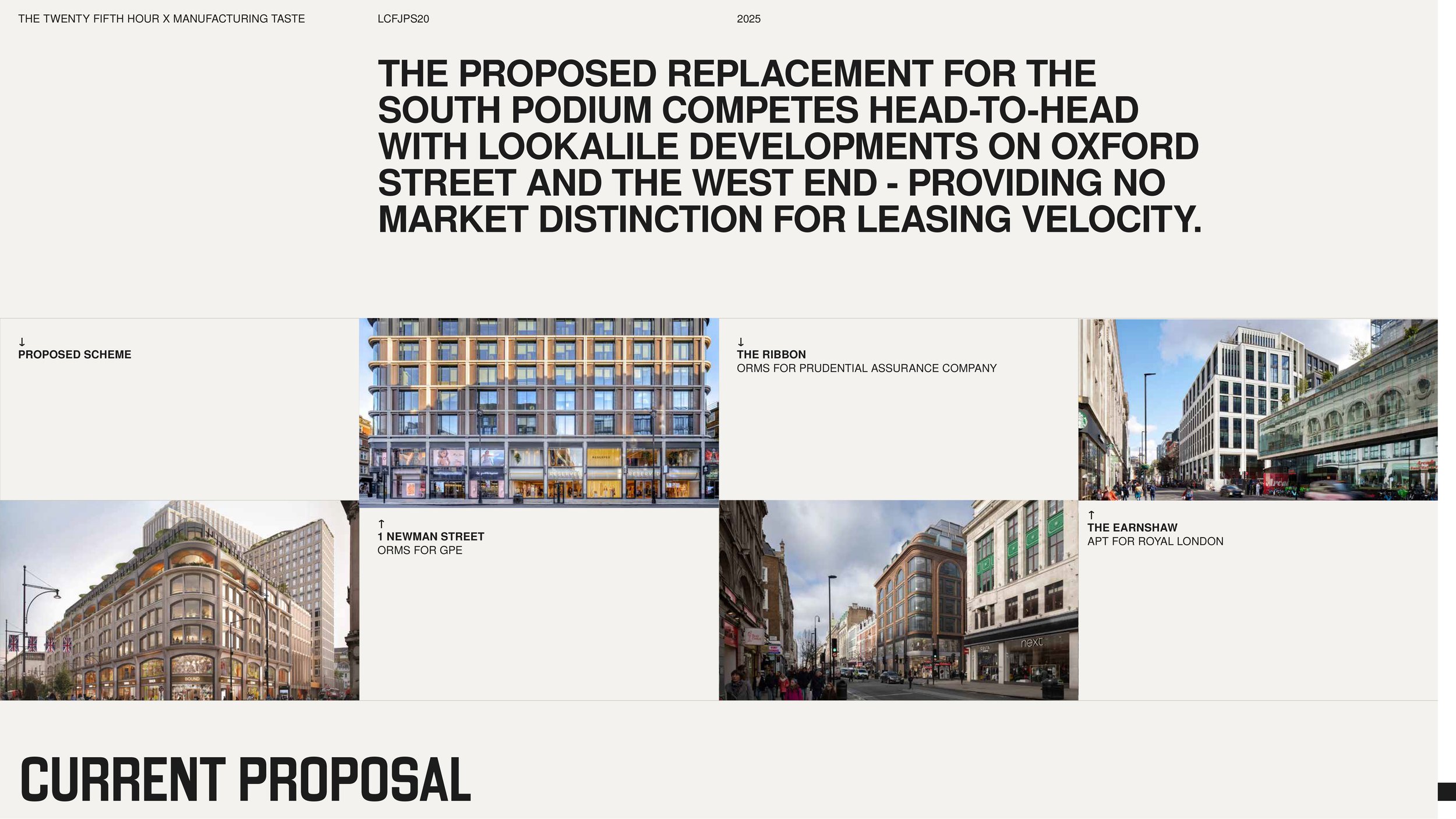
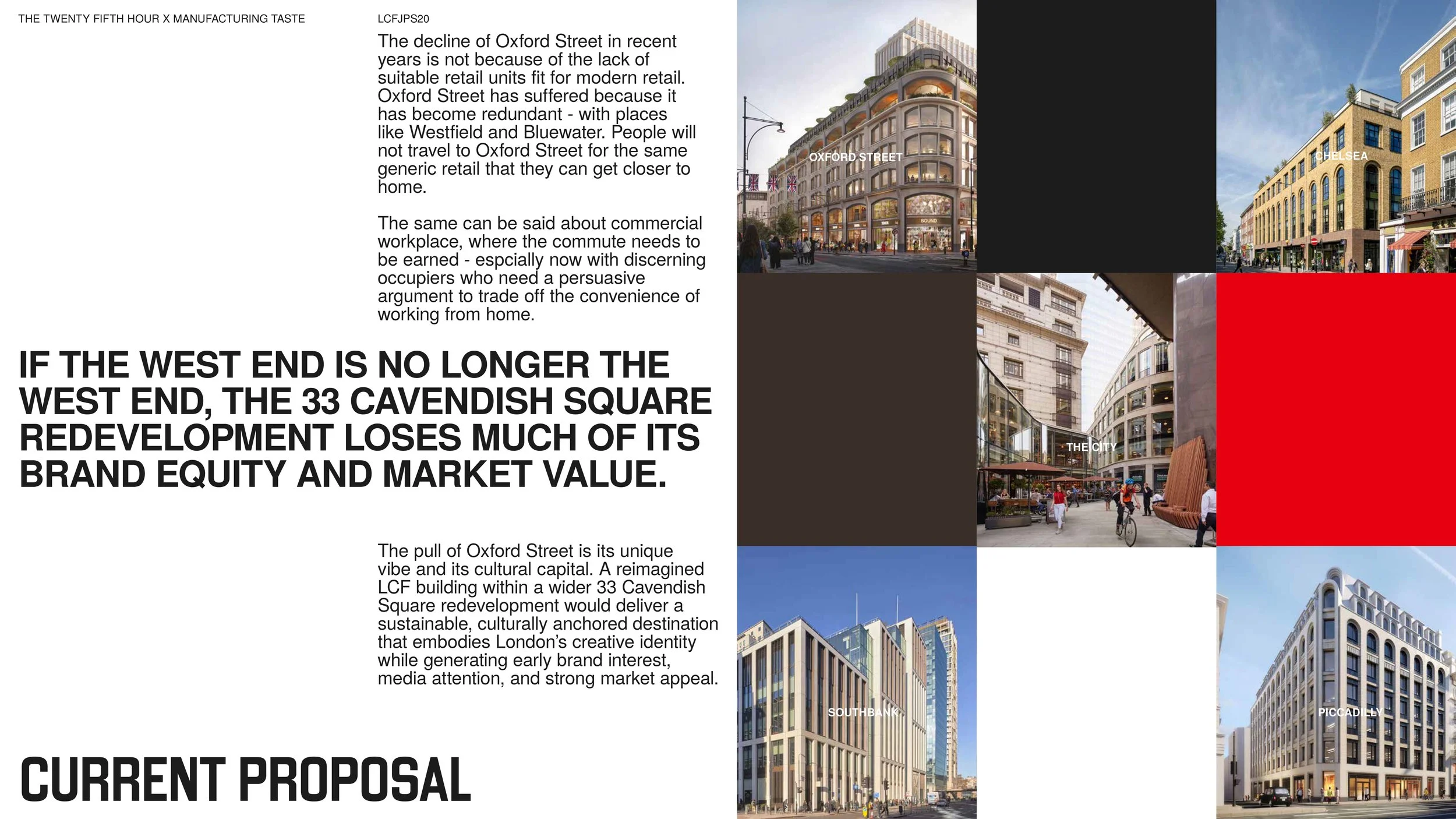
Rather than opposing development in principle, the campaign tested whether retained architectural form, cultural memory, and spatial identity could operate as commercial infrastructure within a large-scale redevelopment.
The approach was deliberately collaborative and commercially framed, positioning the retained LCF building as a catalyst for market distinction, early leasing interest, reputational uplift, and long-term brand equity for the wider 33 Cavendish Square scheme.
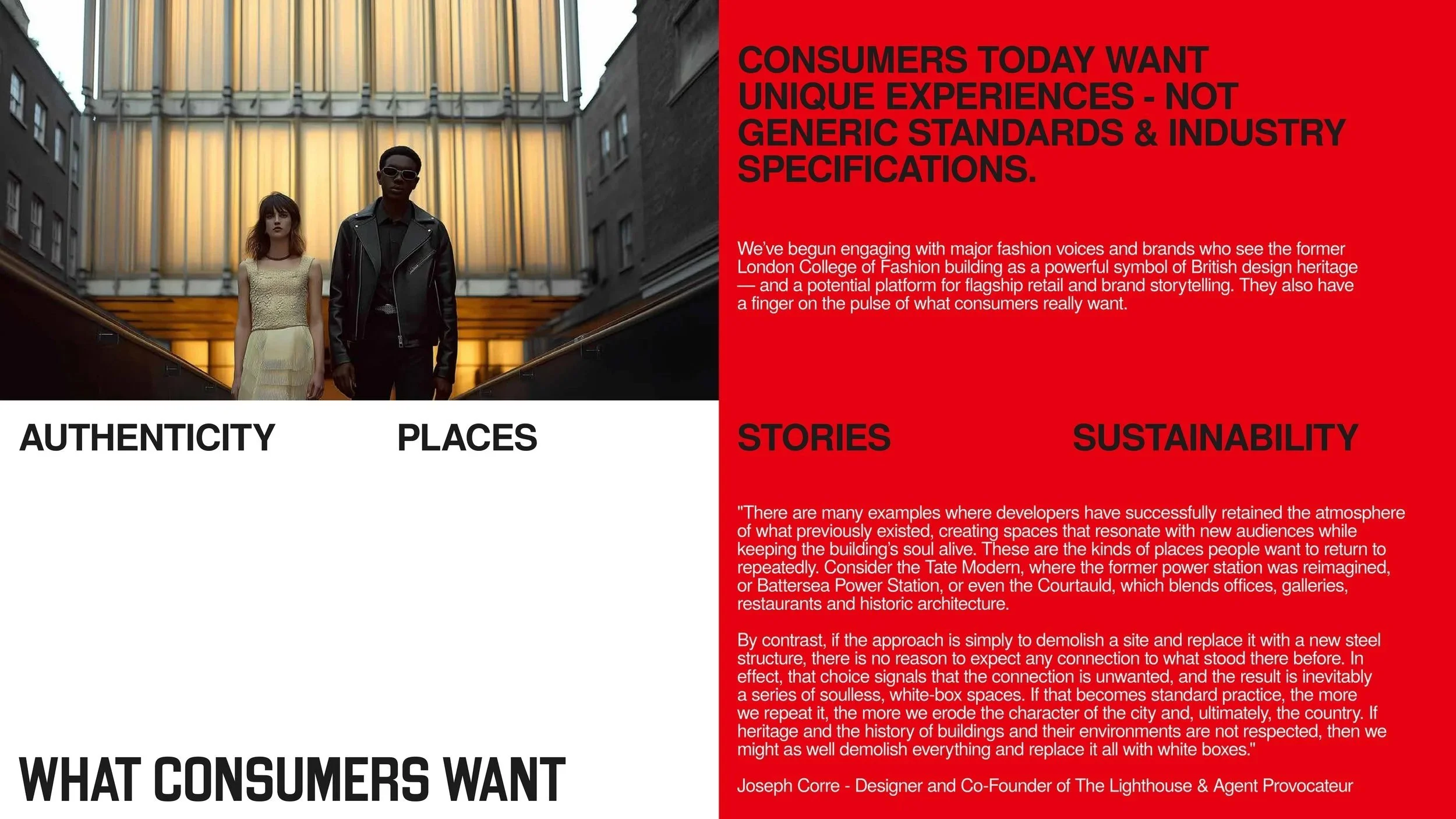
The response revealed the latent influence architecture holds over identity and attachment. The campaign mobilised voices across the creative industries in fashion, architecture, media, and retail - many of whom had not previously recognised how strongly they felt about architecture as a cultural and commercial force.
In just one week, a single campaign video reached nearly 55,000 views, while a petition drew over 500 verified signatures from LCF alumni and industry professionals. Coverage appeared in Architects’ Journal, Londonist, FashionUnited, Time Out, and Design Week, demonstrating engagement beyond local planning discourse.
Architecture as Brand Infrastructure
This work positions architecture not as a response to branding, but as a generator of it. Retained buildings with cultural recognition provide developers with competitive advantage that cannot be replicated through finishes or marketing alone. The project demonstrates how architecture can signal identity, anchor legitimacy, and differentiate a development in crowded urban markets — blending design excellence with measurable commercial outcomes.